Flood damage can feel like a catastrophic explosion in your life. It’s vital to act swiftly and methodically to minimize further harm. First, you’ll need to assess the damage and ensure your safety. Next, tackling the water removal and drying process becomes essential. Finally, restoring your space and belongings is key. Understanding these steps can make a significant difference in your recovery journey. So, what comes next in this vital process?
Key Takeaways
- Assess damage and ensure safety by inspecting for structural issues and electrical hazards before starting cleanup.
- Remove standing water promptly using pumps or wet vacuums to prevent further damage and mold growth.
- Dry affected areas thoroughly by enhancing air circulation with fans and dehumidifiers to expedite the drying process.
- Restore and repair damaged structures, focusing on cleaning and salvaging belongings while consulting professionals for significant issues.
- Document all damage and repairs meticulously for insurance claims and plan for future prevention measures against flooding.
Assess the Damage and Ensure Safety
Before you begin the cleanup process, it’s crucial to assess the damage and ensure your safety. Start by inspecting your property for structural issues, such as cracks in walls or ceilings.
Make sure to check for electrical hazards; if you see any exposed wires or water near outlets, don’t hesitate to turn off the power. Document everything during your damage assessment, taking photos and notes to support potential insurance claims later.
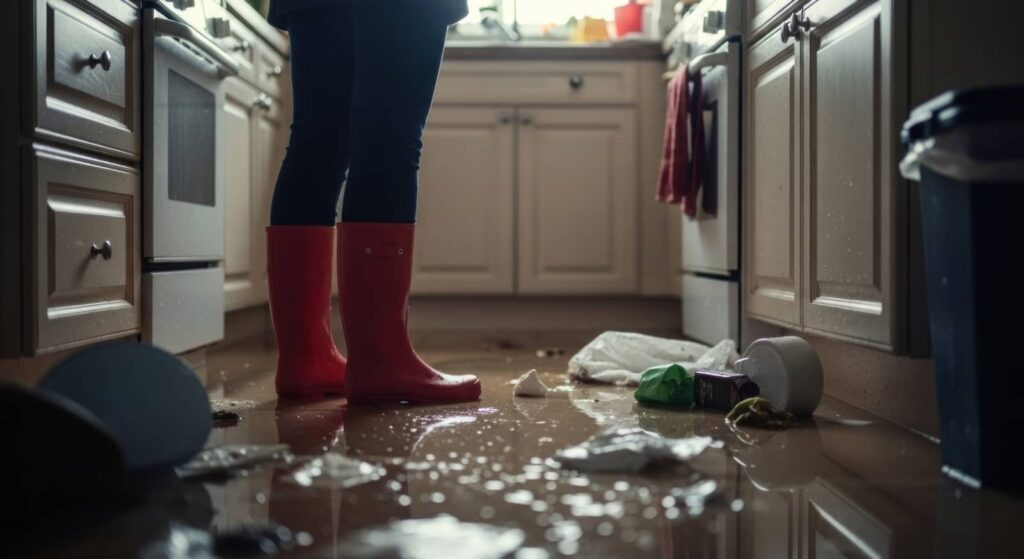
Safety precautions are imperative at this stage. Wear protective gear, including gloves, boots, and masks, to shield yourself from contaminants.
If the damage seems extensive, consider contacting professionals who can manage the situation safely. You’re not alone in this; reach out to neighbors or local support groups, as sharing experiences can help you feel more connected during this challenging time.
Prioritizing safety and thorough assessment will set the foundation for an effective cleanup process.
Remove Water and Dry Affected Areas
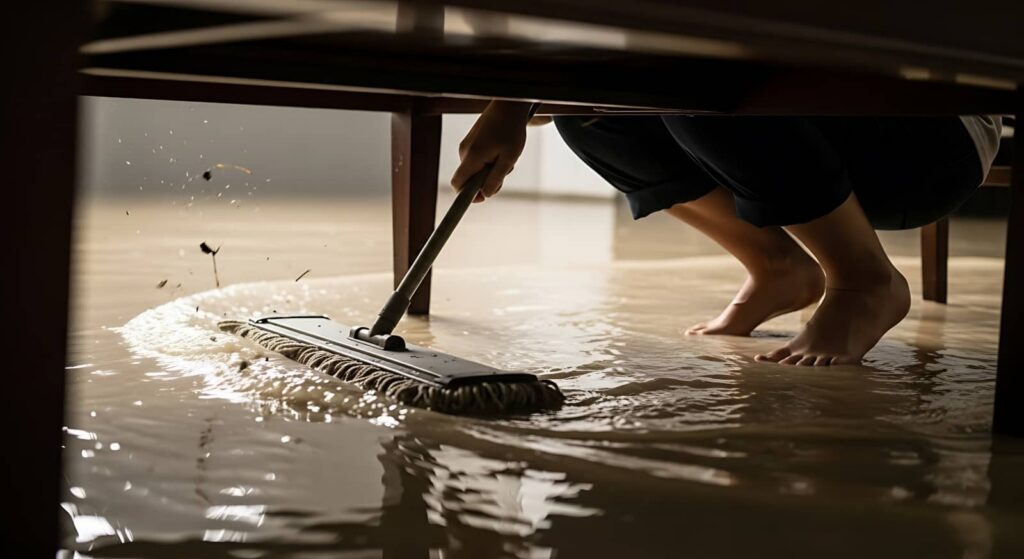
Begin by removing standing water as quickly as possible to minimize further damage. Use water extraction methods like pumps and wet vacuums to efficiently eliminate excess water. This initial step is essential, as stagnant water can lead to mold growth and structural issues if left unattended.
Once the water is cleared, focus on drying affected areas using various drying techniques. Open windows and doors to enhance air circulation, and consider using fans and dehumidifiers to expedite the process.
You might also want to remove soaked materials, such as carpets or drywall, to facilitate better airflow and drying.
Restore and Repair Damaged Structures and Belongings
Once you’ve removed the water and dried the affected areas, it’s crucial to assess and restore any damaged structures and belongings.
Start by evaluating the structural integrity of your home. Look for signs of warping, mold, or compromised materials that could affect safety. If you notice significant damage, consult a professional for flood restoration to verify repairs meet safety codes.
Next, prioritize your belongings. Clean and salvage what you can, focusing on items with sentimental value. For furniture and electronics, thorough cleaning may suffice, but some items may need replacement.
Consider using a restoration service to help with specialized cleaning techniques for valuable possessions.
Document everything for insurance claims, noting both damaged structures and belongings. Taking these steps helps you rebuild your space and regain a sense of normalcy, turning a challenging recovery into a path toward restoration and renewal.
Frequently Asked Questions
How Can I Prevent Mold Growth After Flooding?
To prevent mold growth after flooding, you need effective mold prevention techniques. Use moisture-control methods, such as dehumidifiers, and ensure proper ventilation. Regularly check for damp areas, and act quickly to keep your space safe.
What Insurance Coverage Is Available for Flood Damage?
Is your home truly protected? Flood insurance provides essential coverage for damages, but be aware of coverage limits. Understanding your policy helps ensure you’re not left high and dry when disaster strikes.
Should I Keep Damaged Belongings or Discard Them?
You should assess each item’s sentimental value versus restoration costs. If the cost to restore exceeds its worth or if health risks exist, it’s wiser to discard the belongings. Prioritize safety and emotional well-being.
How Long Does Flood Damage Cleanup Typically Take?
Flood damage cleanup typically takes several days to weeks, depending on the severity. You’ll need to factor in the restoration timeline for drying, repairs, and inspections, ensuring your belongings receive the care they deserve throughout the process.
Can I Handle Flood Cleanup Myself or Hire Professionals?
You can handle flood cleanup yourself with DIY methods, but hiring professional services often ensures thorough, safe results. Consider your skills, resources, and the extent of damage—your well-being matters, and support is available.
Recap
In the aftermath of a flood, think of your home as a resilient ship weathering a storm. Just as a captain meticulously inspects their vessel for damage, you must assess your property for hazards and ensure safety. By removing water and drying the affected areas, you’re patching the leaks. Finally, restoring and repairing your home safeguards against future tempests. With diligence and care, you can navigate the tumultuous waters of recovery and steer your ship back to safety.