Many business owners underestimate the critical importance of following structured commercial flood damage repair steps. Quick and methodical actions mitigate immediate damage and determine the long-term viability of your property. Ignoring these steps can lead to costly repairs and insurance complications. Understanding each phase of the process can save you time and money, but knowing where to start can be overwhelming. It is crucial to grasp how each action contributes to an effective recovery strategy.
Key Takeaways
- Following repair steps minimizes property damage and prevents minor issues from escalating into costly repairs.
- Prompt action helps ensure safety for all team members during the cleanup process.
- Thorough documentation aids in expediting insurance claims and securing necessary funds for repairs.
- Regular maintenance and assessments reduce the risk of future flooding and associated damages.
- Implementing effective drainage systems enhances overall property resilience against water-related issues.
Understanding the Importance of Prompt Action
When flooding occurs, every minute counts, and by acting quickly, you can greatly mitigate damage to your property. A prompt response is essential; it can mean the difference between minor repairs and extensive restoration. As soon as you notice water intrusion, take immediate action to safeguard your belongings and infrastructure.
Start by shutting off the main water supply to prevent further flooding. Next, evacuate any personnel and inform your team about the situation. Use pumps or wet vacuums to remove standing water, and ensure that you wear protective gear throughout the process.
Don’t forget to document the damage with photos for insurance claims. Your swift and decisive actions will protect your assets and foster a sense of safety and community among your team.
Assessing the Extent of Water Damage
To effectively assess the extent of water damage, you’ll first need to identify the initial source of the water.
Next, evaluate any structural damage, as this will determine the safety of the space.
Finally, conduct a thorough contents and inventory check to understand what items may need repair or replacement.
Initial Water Source Identification
Identifying the initial water source is essential for effectively evaluating the extent of water damage in a commercial space.
Start by pinpointing potential water sources, such as burst pipes, roof leaks, or malfunctioning appliances. Use identification techniques like visual inspections, moisture meters, and infrared cameras to assess affected areas accurately.
Pay attention to unusual dampness or discoloration, as these signs can lead you to the source. Don’t forget to check hidden spaces, such as behind walls or under flooring, where water may accumulate unnoticed.
Structural Damage Evaluation
Structural damage evaluation is a crucial step in the flood damage repair process, as it helps you understand the severity of water intrusion in your commercial property.
You’ll want to start by evaluating the foundation stability, as any compromise can lead to significant long-term issues. Carefully inspect for cracks, shifting, or other signs of distress that could indicate deeper problems.
Next, conduct load-bearing evaluations to verify that structural elements like beams and walls remain intact and capable of supporting the building.
This methodical approach safeguards your investment and ensures the safety of occupants. By prioritizing these evaluations, you show your commitment to maintaining a secure and functional environment for everyone involved.
Contents and Inventory Check
A thorough contents and inventory check is essential for understanding the full extent of water damage in your commercial property.
This step helps you identify affected items and aids in effective inventory management, ensuring you don’t overlook anything vital.
- Document all damaged items and their conditions.
- Categorize contents for easier assessment and restoration.
- Prioritize items based on value and usability.
- Work with professionals for content restoration to maximize recovery.
Ensuring Safety During the Cleanup Process
While you’re steering through the aftermath of a flood, ensuring safety during the cleanup process is essential to protect yourself and others. Start with a thorough hazard assessment to identify potential dangers like electrical risks, contaminated water, or structural damage.
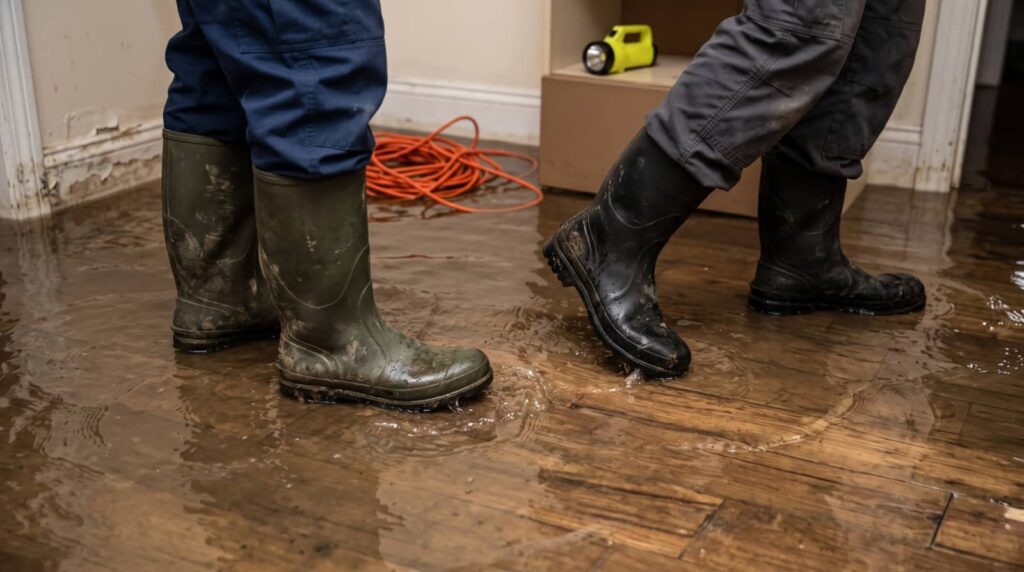
Equip yourself with proper safety equipment, such as gloves, masks, and waterproof boots, to safeguard against contaminants and injuries.
Always work with a buddy; this isn’t a task to tackle alone. Keep communication open, sharing your observations about hazards as you go. If you encounter any toxic materials or mold, alert your team and take necessary precautions.
Pay attention to your surroundings and monitor for risks like sharp debris or unstable surfaces. Remember, your safety is paramount—without it, you can’t effectively assist others.
Removing Standing Water Effectively
With safety measures in place, the next step involves effectively removing standing water, which can lead to further damage and mold growth if left unattended.
You’ll want to utilize reliable pumping solutions to ensure thorough water extraction. Here are some key points to take into account:
- Assess the water depth to choose the right equipment.
- Use submersible pumps for larger areas with deep water.
- Employ wet vacuums for smaller spaces or residual water.
- Identify and safeguard electrical hazards before starting.
Drying and Dehumidifying the Affected Areas
Once standing water is removed, the next critical step is drying and dehumidifying the affected areas to prevent mold growth and structural damage.
You’ll want to utilize high-quality dehumidifying equipment to effectively remove excess moisture from the air and surfaces. This process helps in drying out carpets and walls and minimizes the risk of long-term issues that can arise from dampness.
While dehumidifying, it’s crucial to conduct moisture monitoring regularly. Use moisture meters to measure levels in various materials, ensuring everything returns to a safe, dry state.
Pay special attention to hidden spots like behind walls or under flooring, where moisture can linger unnoticed. By meticulously following these steps, you create a safer environment and foster a sense of reassurance for everyone involved.
Cleaning and Sanitizing Contaminated Surfaces
Cleaning and sanitizing contaminated surfaces is essential after a flood to eliminate harmful pathogens and restore a safe environment. By employing effective cleaning techniques and using sanitizing agents, you can ensure that your space is free from bacteria and mold, which can pose health risks.
- Use appropriate personal protective equipment (PPE) to safeguard yourself.
- Choose EPA-approved sanitizing agents for effective disinfection.
- Focus on high-touch areas like doorknobs, light switches, and countertops.
- Follow a systematic approach to avoid cross-contamination.
Start by thoroughly cleaning surfaces with soap and water to remove dirt and debris. Once clean, apply your chosen sanitizing agent according to the manufacturer’s instructions. Allow it to sit for the recommended time to kill pathogens effectively.
This meticulous process protects your health and fosters a sense of community by ensuring shared spaces are safe for everyone.
Evaluating Structural Integrity and Repairs
After sanitizing surfaces, it’s essential to assess the structural integrity of your property to confirm safety and stability.
Start with thorough structural assessments to identify any damage to walls, floors, and foundations. Look for signs of water intrusion, such as cracks or sagging. Addressing these issues early prevents further complications and ensures a safe environment for everyone.
Once you’ve pinpointed the damaged areas, explore various repair options. Depending on the extent of the damage, you might consider reinforcing weakened structures, replacing compromised materials, or even seeking professional help for extensive repairs.
Consulting with experts can provide you with tailored solutions, assuring your property is restored correctly.
Maintaining the integrity of your space protects your investment and fosters a sense of belonging for everyone who uses it.
Preventing Future Flood Damage
To prevent future flood damage, you need to implement a proactive approach that includes regular maintenance checks on your property.
Ensuring effective drainage systems can greatly reduce water accumulation during heavy rains.
Additionally, having an emergency preparedness plan in place will equip you to respond swiftly and minimize potential damage.
Regular Maintenance Checks
While it may seem tedious, conducting regular maintenance checks is essential for preventing future flood damage in your commercial property.
By implementing preventive measures through routine inspections, you can identify potential issues before they escalate.
Consider incorporating the following into your maintenance routine:
- Inspect gutters and downspouts for clogs
- Check for cracks in the foundation or walls
- Test sump pumps and drainage systems
- Monitor landscaping for proper grading
Effective Drainage Systems
Effective drainage systems are essential for safeguarding your commercial property against flood damage, especially when heavy rains occur. By implementing efficient drainage solutions, you can considerably enhance your flood prevention strategy.
Start by evaluating your property’s layout and identifying potential water accumulation points. Installing French drains, catch basins, or surface drains can effectively redirect water away from your building. Regularly clean and maintain these systems to ensure peak performance.
Additionally, consider grading your landscape to promote natural drainage. Educating your staff about the importance of these systems fosters a sense of community responsibility, encouraging everyone to contribute to your property’s protection.
Emergency Preparedness Plans
Creating a thorough emergency preparedness plan is essential for minimizing flood damage to your commercial property. By being proactive, you can protect both your assets and your team.
Here are some key components to take into account:
- Assemble emergency kits stocked with essential supplies.
- Develop clear communication plans to keep everyone informed.
- Identify evacuation routes and safe zones.
- Schedule regular training sessions for your staff.
These elements foster a sense of community and readiness. When you prioritize preparedness, you create an environment where everyone feels secure and valued.
Engaging your team in these plans ensures that they understand their roles during an emergency, reinforcing the importance of teamwork in overcoming challenges.
Documenting the Damage for Insurance Claims
Documenting the damage from a flood is an essential step in ensuring your insurance claim is successful. Start by taking clear, detailed photos of all affected areas, capturing both wide shots and close-ups of specific damage.
Create an inventory of damaged items, noting their condition and estimated value. This insurance documentation serves as critical evidence during the claim process.
Be methodical; include dates and descriptions for each photo and item. If possible, document the water levels and any other relevant conditions to provide context.
Don’t forget to keep copies of all correspondence with your insurance provider. Organizing this information helps expedite your claim and demonstrates your preparedness and diligence, fostering a sense of community support amidst the recovery process.
Frequently Asked Questions
What Should I Do Before Professionals Arrive for Flood Damage Repair?
Before professionals arrive, prioritize safety precautions by turning off utilities, wearing protective gear, and avoiding floodwaters. Conduct a damage assessment, documenting affected areas and items, so you can provide detailed information to the repair team.
How Long Does the Flood Damage Repair Process Typically Take?
Imagine water receding, revealing the damage beneath. Typically, the flood duration impacts your repair timeline; it can take several days to weeks, depending on the extent of the damage and drying needed.
Can I Handle Flood Damage Repairs on My Own?
You can handle DIY repairs, but prioritize safety precautions. Assess the damage thoroughly, wear protective gear, and ensure proper ventilation. If the situation feels overwhelming, don’t hesitate to seek professional assistance for peace of mind.
What Are Common Mistakes to Avoid During Flood Damage Cleanup?
During flood cleanup, dodge common cleanup pitfalls like procrastination and poor planning. Prioritize prevention strategies, ensuring thorough drying and sanitization. You’ll create a safe space, fostering a sense of community and belonging for all affected.
Will My Insurance Cover All Flood Damage Repair Costs?
Your insurance coverage might not cover all flood damage repair costs. Check your policy details, as many exclude certain types of flooding. Understanding your coverage can help you prepare for potential out-of-pocket expenses.
Review
By following the commercial flood damage repair steps, you’re not just salvaging your property; you’re dodging a disaster of epic proportions. Every moment counts, and your prompt action can mean the difference between minor inconveniences and catastrophic losses. Prioritizing safety, thorough documentation, and preventive measures sets you up for a smoother recovery and a more resilient future. Don’t underestimate the power of being prepared—your swift response today can save you from a tidal wave of headaches tomorrow.