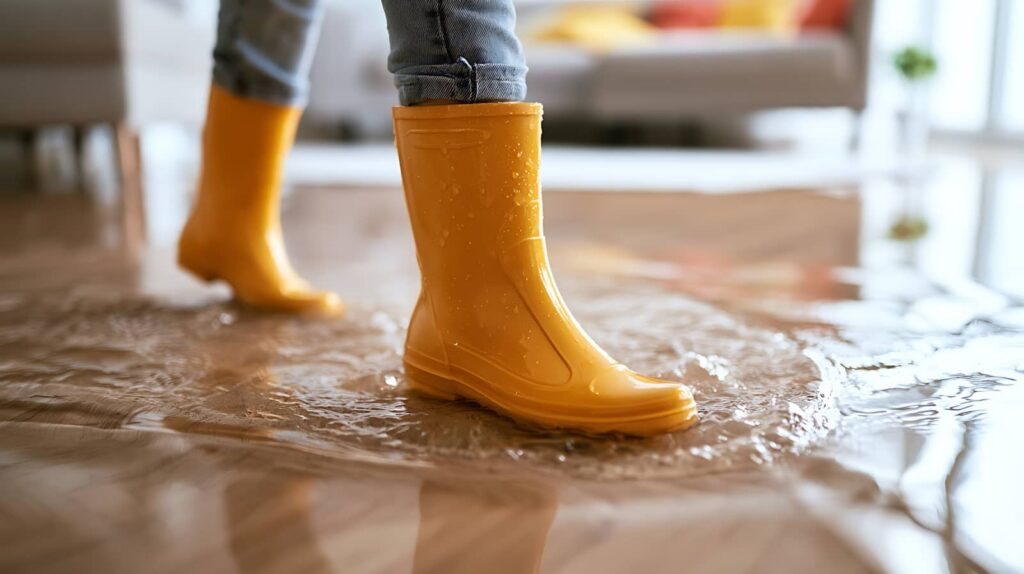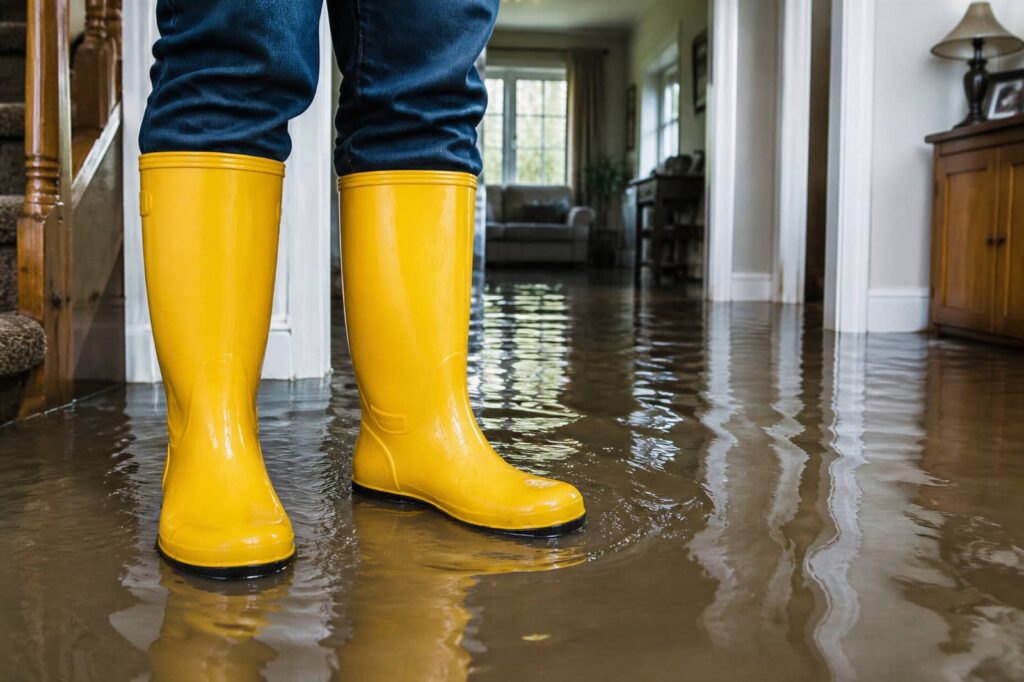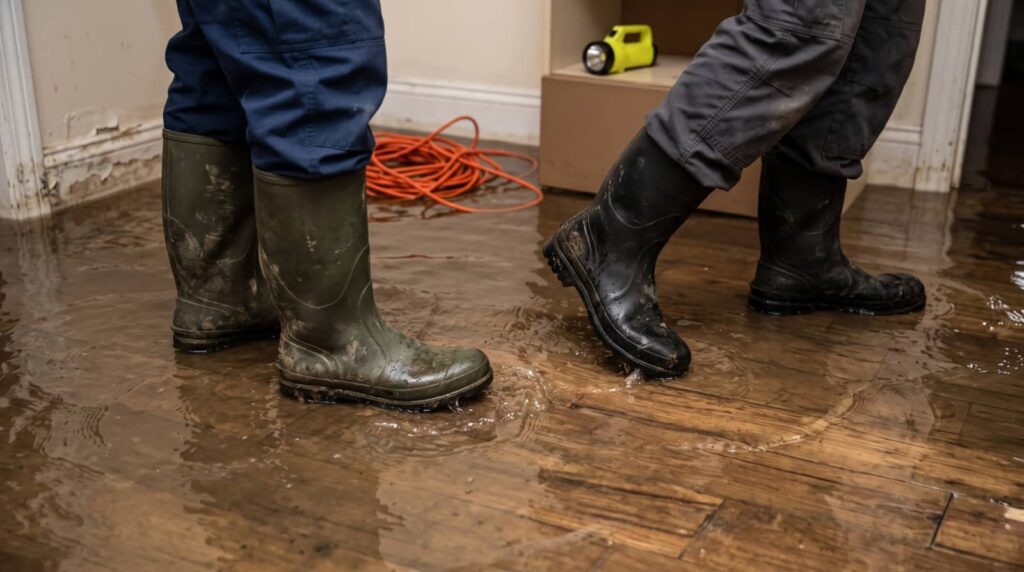
When basement water intrusion starts, you need to act quickly to limit structural damage and mold growth. First, shut off the main water supply and cut power to affected circuits to keep the area safe. Then remove standing water with a sump or submersible pump, watching the unit so it doesn’t run dry. After that, you’ll need to dry hidden moisture before it spreads further—and that’s where the next steps become critical.
Key Takeaways
- Stop the water source, shut off basement power safely, and avoid stepping into standing water.
- Remove portable items and map the flooded area to speed extraction and reduce spread.
- Use a sump pump or submersible pump at the lowest point to remove deep standing water.
- Start drying immediately with fans and dehumidifiers, keeping the basement sealed if outside air is humid.
- Prevent mold by keeping humidity below 60%, cleaning hard surfaces, and discarding unsalvageable porous materials.
Act Fast to Limit Basement Damage
The sooner you start basement water extraction, the less chance water has to seep into drywall, flooring, insulation, and structural materials.
You protect your space by acting immediately, because standing water accelerates water damage and raises repair costs.
Start by mapping the affected area, removing portable items, and creating clear access for extraction equipment.
Rapid response also supports flood prevention by limiting spread into adjacent rooms and lower wall cavities.
You’ll keep moisture from lingering in hidden pockets, where it can weaken finishes and promote deterioration.
If you move decisively, you give your home the best chance to dry evenly and safely.
In a basement emergency, your fast action matters, and you’re not handling it alone.
Shut Off Water and Power Safely
Before you begin basement water extraction, shut off the main water supply if a burst pipe, fixture failure, or plumbing backup is still feeding the leak.
Then confirm water source identification by tracing valves to the affected line, meter, or appliance. If you’re unsure, close the main valve at the meter or entry point and verify flow has stopped.
Next, protect your crew with electrical safety measures: turn off basement circuits at the breaker panel, but never step into pooled water to reach it. If the panel is wet, contact a licensed electrician.
Keep flashlights, insulated footwear, and dry hands ready. You’re not alone in this; these steps help you stabilize the area, reduce shock risk, and create a controlled space for the next phase.
Remove Standing Water With a Pump
Once you’ve cut power and confirmed the leak is stopped, you can begin pulling out the standing water with a pump.
If your basement has a sump pump, verify it’s running and discharging outside. If it’s overwhelmed or absent, use a submersible pump placed on the lowest stable point.
Connect the hose securely, route it to a safe drain, and keep the outlet clear so water flows freely. Start the pump and monitor it closely; don’t let it run dry. Move the pump as water drops to maintain intake coverage.
You’re handling this like a pro, and careful setup protects your space. If the water is deep, work in stages so the pump stays effective and manageable throughout the extraction process.
Dry Floors, Walls, and Hidden Moisture
As the standing water recedes, start drying the basement immediately so moisture doesn’t keep spreading into materials and framing.
You should run high-velocity fans across floors and direct airflow along wall bases to speed evaporation. Open windows only if outdoor air is drier than indoor air; otherwise, keep the space sealed and ventilated by equipment.
Use moisture detection tools to check concrete, trim, and insulation behind finished surfaces, because damp pockets can persist after the visible water is gone.
For wall drying, remove baseboards if needed so air reaches trapped edges and joints. Continue until readings stabilize at safe levels.
Stay methodical, and trust the process—you’re protecting the whole space, one layer at a time, with careful drying and attention to hidden moisture.
Prevent Mold After Water Removal
Even after the water is gone, you still need to stop mold from taking hold by keeping the basement dry, cool, and well-ventilated.
Run fans and a dehumidifier right away to improve air circulation and support humidity control below 60 percent.
Check framing, insulation, carpet, and stored items for dampness; if anything stays wet for 24 to 48 hours, remove it.
Clean hard surfaces with detergent, then dry them completely.
For porous materials that can’t be fully sanitized, follow proper material disposal so spores don’t spread.
Inspect daily for musty odors, discoloration, or condensation on pipes and walls.
If you act fast, you protect your space and the people who share it, keeping your basement safe, healthy, and part of a resilient home.
Frequently Asked Questions
How Do I Know if Basement Flooding Is Sewage-Contaminated?
If your basement smells like a sewer storm and leaves dark silt, you’re seeing sewage indicators and contamination signs. You’ll notice gray-brown water, toilet backups, or floating debris. Don’t enter; call professionals and stay together safely.
What Insurance Documentation Should I Collect After Water Damage?
You’ll want photos, videos, receipts, repair estimates, and a detailed damage assessment for your insurance claim. Keep dates, times, and communications organized, and document damaged belongings clearly so you’ll feel supported and prepared.
When Should I Call a Professional Water Extraction Company?
Call a professional water extraction company when water rises fast, covers electrical systems, or exceeds 2 inches; 60% of severe losses worsen within 24 hours. You’ll get emergency response, protect your home, and feel supported.
Can Basement Contents Be Salvaged After Prolonged Flooding?
Yes, you can salvage some items after prolonged flooding, but you’ll need to assess salvageable items quickly. The restoration process favors hard surfaces, sealed plastics, and metal, while porous materials often aren’t safe to keep.
How Do I Check for Structural Damage After Water Extraction?
Start with a water damage assessment and check foundation stability: inspect cracks, bowing walls, uneven floors, and sticking doors. As they say, a stitch in time saves nine. You’ll know quickly if you need a pro.
Conclusion
When you act fast, you turn a flooded basement from a threat into a passing storm. Shut off water and power, pump out standing water, then dry every floor, wall, and hidden cavity. Use fans and dehumidifiers like tools of rescue, not guesswork. Once the last damp spot fades, you’ve cut mold off at the source. Your basement can become a dry foundation again, steady and safe beneath your home.