In emergency situations, where water can wreak havoc like an uninvited guest, having the right tools at your disposal is essential. You’ll find that wet/dry vacuums, submersible pumps, and industrial dehumidifiers each play a pivotal role in effective emergency water removal. But understanding how to use these tools effectively can make all the difference in your cleanup efforts. What other equipment might enhance your approach?
Key Takeaways
- Wet/Dry Vacuums effectively manage small volumes of water during emergency situations, providing quick and efficient extraction.
- Submersible Pumps are essential for deep water removal in larger areas, operating safely underwater to handle significant amounts.
- Industrial-Grade Dehumidifiers reduce humidity, preventing mold growth and improving air quality after water extraction.
- Moisture Meters accurately measure moisture levels in materials, helping to identify hidden water damage and prioritize drying efforts.
- Protective Gear such as rubber boots and respirators ensures safety during water removal and cleanup operations.
Essential Tools for Emergency Water Removal
When flooding strikes your home, having the right tools at your disposal can make all the difference in a swift recovery.
Essential tools for emergency water removal include wet/dry vacuums, submersible pumps, and water extraction tools. Wet/dry vacuums effectively handle smaller volumes of water, while submersible pumps are crucial for larger areas.
You should also consider industrial-grade dehumidifiers to prevent mold growth post-extraction. Employing these tools aligns with effective water extraction techniques and flood response strategies, ensuring you’re prepared for rapid action.
Additionally, having sturdy buckets, towels, and a reliable source of power can enhance your efforts. Being equipped aids immediate recovery and fosters a sense of community support during challenging times.
How to Use Pumps for Effective Water Extraction?
When it comes to effective water extraction, understanding the different types of water pumps is essential.
You’ll need to follow specific operation guidelines to maximize efficiency and ensure safety during the process.
Types of Water Pumps
Understanding the various types of water pumps is essential for effective water extraction, especially in emergency situations. Here are some key pump types to evaluate:
Submersible Pumps: Ideal for deep water removal, they operate underwater.
Centrifugal Pumps: Great for quick drainage, they use rotational energy to move water.
Trash Pumps: Designed for debris-laden water, they handle tough conditions.
Diaphragm Pumps: Suitable for precise applications, they offer controlled flow rates.
Other options include portable pumps for mobility, sump pumps for basement drainage, hydraulic pumps for heavy-duty tasks, and electric pumps for efficiency.
Knowing these types helps you choose the right pump for your specific needs, ensuring swift and effective water removal when it matters most.
Pump Operation Guidelines
To achieve effective water extraction, you need to follow specific operational guidelines for each type of pump. First, verify your pump is properly maintained; check for blockages and confirm that all connections are secure.
Regular pump maintenance enhances performance and prolongs the unit’s lifespan.
When operating the pump, monitor its output to identify any irregularities—this is essential for effective pump troubleshooting. If you notice unusual noises or reduced water flow, shut it down immediately to prevent damage.
Familiarize yourself with the manufacturer’s manual for detailed instructions tailored to your specific model.
Importance of Dehumidifiers in Water Damage Recovery
Dehumidifiers play an essential role in managing moisture during water damage recovery.
By effectively reducing humidity levels, they speed up the drying process and prevent further damage.
Understanding how to utilize these devices can greatly enhance your recovery efforts.
Moisture Control Mechanism
While tackling water damage, controlling moisture levels is essential for effective recovery, and dehumidifiers play an important role in this process. They help you manage humidity effectively through accurate moisture measurement and humidity assessment, ensuring a healthier environment.
- Prevent mold growth by reducing excess moisture.
- Enhance air quality by removing dampness.
- Speed up the drying process of affected areas.
- Protect your belongings from water damage.
Using dehumidifiers helps restore your space and creates a sense of belonging and safety in your home.
Speed Up Drying Process
When water damage occurs, swift action is essential to minimize loss, and using dehumidifiers can greatly accelerate the drying process.
These devices efficiently remove excess moisture from the air, which is important in preventing mold growth and structural damage. By employing dehumidifiers alongside other drying techniques, you create an ideal environment for faster evaporation.
The key is to position dehumidifiers in areas with the highest humidity levels, ensuring they operate effectively. Regularly monitoring humidity levels helps you adjust settings for maximum efficiency.
Best Water Vacuums for Emergency Cleanup
In emergency situations, having the right water vacuum can make all the difference in swiftly restoring your space. Effective water removal techniques are vital, and choosing the best vacuum is key to your emergency cleanup strategies.
Here are some top options:
Shop Vacuums: Versatile and powerful, ideal for large volumes of water.
Wet/Dry Vacuums: Designed specifically for liquid removal; they handle both wet and dry debris.
Submersible Pumps: Perfect for deep water situations, they can quickly clear flooded areas.
Portable Water Extractors: Compact and easy to maneuver, great for tight spaces.
Selecting the right water vacuum ensures you’re prepared to tackle any emergency, giving you peace of mind and a quicker recovery.
How Fans Speed Up the Drying Process?
Using fans enhances air circulation, which is essential for effective drying.
They accelerate moisture evaporation by increasing airflow over wet surfaces, making it easier for water to escape.
Additionally, fans help regulate temperature, creating an environment that further boosts the drying process.
Air Circulation Importance
Effective air circulation is essential for expediting the drying process after water damage, as it greatly enhances evaporation rates. By employing proper airflow techniques and circulation methods, you can notably improve the efficiency of your drying efforts.
Here are key benefits of effective air circulation:
- Reduces humidity levels, preventing mold growth
- Speeds up drying time for affected surfaces
- Increases air movement, promoting faster evaporation
- Enhances overall air quality in the environment
Utilizing fans strategically can help you achieve ideal airflow, which is vital in emergency situations.
Moisture Evaporation Acceleration
While you mightn’t realize it, fans play an essential role in accelerating moisture evaporation during the drying process. By promoting air circulation, fans disrupt the boundary layer of humid air near damp surfaces, enhancing evaporation techniques.
This action helps moisture penetrate moisture barriers more effectively, ensuring a thorough drying process. The increased airflow allows moisture to evaporate faster, reducing the risk of mold growth and structural damage.
When positioning fans, aim them toward the wet areas while considering the overall airflow path. Combining fans with dehumidifiers can optimize results, as this dual approach addresses both evaporation and humidity levels.
Temperature Regulation Effects
Fans not only enhance air circulation but also play a significant role in regulating temperature, which accelerates the drying process. By lowering the temperature impact on surfaces, fans help reduce humidity levels, making it easier for moisture to evaporate.
Here’s how fans contribute to effective drying:
Increased airflow: Fans circulate air, preventing stagnant conditions.
Lowered temperature: Cooler air can hold less moisture, speeding up evaporation.
Reduced humidity: Lower humidity levels promote faster drying in affected areas.
Even drying: Fans ensure consistent airflow across surfaces, preventing damp spots.
Utilizing fans strategically can drastically improve your water removal efforts, ensuring your environment dries quickly and efficiently.
Role of Moisture Meters in Water Removal
Moisture meters play an essential role in water removal by providing accurate measurements of moisture levels in various materials.
With these devices, you can effectively conduct moisture level assessments to determine the extent of water damage in walls, floors, and other surfaces.
The moisture meter benefits you by helping identify hidden moisture pockets that could lead to mold growth if left untreated.
By using this tool, you can prioritize drying efforts and ensure that all affected areas are addressed promptly.
This speeds up the restoration process and safeguards your environment from further damage.
In emergency water removal situations, having a reliable moisture meter is vital for effective and thorough remediation.
Choosing the Right Protective Gear for Cleanup?
How can you ensure your safety during water damage cleanup? Choosing the right protective gear is vital. Here are essential items to take into account:
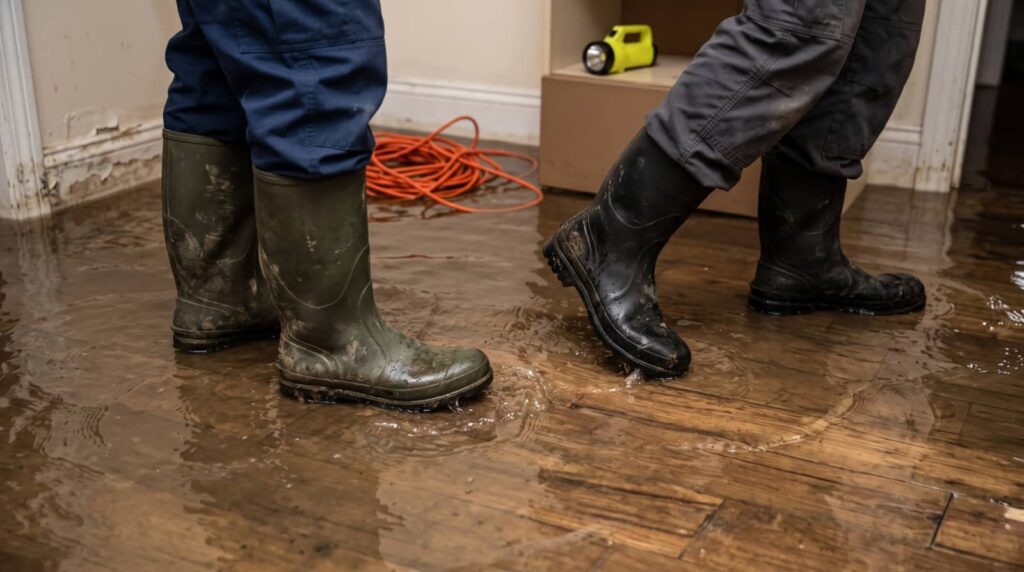
Rubber boots: Protect against electrical hazards and contaminants.
Gloves: Use heavy-duty, waterproof gloves to shield your hands.
Masks: Wear respirators to filter out harmful particles and vapors.
Goggles: Safeguard your eyes from splashes and irritants.
Following established safety protocols ensures you’re prepared for any situation.
Implementing effective cleanup strategies minimizes risks, while regular gear maintenance keeps your equipment reliable.
Using Infrared Cameras to Detect Water Damage
When you’re faced with water damage, using infrared cameras can be a game-changer in identifying hidden issues.
These devices utilize infrared technology to detect variations in temperature, revealing areas where moisture may be present but invisible to the naked eye. By scanning walls, ceilings, and floors, you can pinpoint leaks or damp spots that could lead to further damage if left unchecked.
This efficient water detection method saves time while minimizing the risk of mold growth in your space.
With infrared cameras, you’re equipped to act quickly, ensuring that you tackle water damage effectively. Embracing this advanced technology enhances your ability to maintain a safe and healthy environment for everyone involved.
Importance of Water-Resistant Equipment
Identifying hidden moisture with infrared cameras is just the first step in managing water damage. To effectively respond, you need water-resistant equipment that ensures durability and reliability.
Here are key aspects to take into account:
- Water-resistant materials prevent deterioration and ensure longevity.
- Waterproof storage protects essential tools and documents from moisture.
- Durability in construction helps withstand harsh conditions during emergencies.
- Easy maintenance allows for quick cleaning and readiness for future use.
Utilizing water-resistant equipment not only safeguards your tools but also enhances your overall response strategy.
When you invest in quality materials, you’re ensuring that you and your team are better prepared for any water damage situation, fostering a collective sense of security and efficiency.
Maintaining Your Emergency Water Removal Tools
Start by inspecting your tools after each use; check for clogs, leaks, or wear. Clean them thoroughly, especially filters and hoses, to prevent buildup that can hinder performance.
Store your equipment in a dry, temperature-controlled environment to avoid corrosion and damage. Keep an inventory of parts that may need replacement, such as gaskets or belts, to ensure you’re prepared for emergencies.
Frequently Asked Questions
What Are the Signs of Water Damage in My Home?
You’ll notice water damage signs like water stains on walls or ceilings and musty odors throughout your home. These indicators suggest moisture problems that need immediate attention to prevent further damage and health risks.
How Can I Prevent Future Water Damage Incidents?
To prevent future water damage, implement effective waterproofing methods and install proper drainage solutions. Regularly inspect your property for vulnerabilities, ensuring you maintain a secure environment that protects your home from potential water-related issues.
Is It Safe to Use Electrical Equipment in Flooded Areas?
In a flooded domain, danger lurks. It’s best to avoid using electrical equipment in these areas; electrical hazards can turn a rescue into a tragedy. Prioritize flood safety to protect yourself and those you care about.
What Should I Do Immediately After Water Intrusion?
Immediately start water extraction to minimize damage. Next, conduct a thorough damage assessment to identify affected areas and materials. Document everything for insurance claims, and ensure safety precautions are in place before proceeding with repairs.
How Long Does It Take for Water Damage to Become Severe?
Water damage can escalate within 24 to 48 hours, influenced by severity factors like humidity, temperature, and materials affected. Understanding this water damage timeline helps you act swiftly to minimize long-term effects and restoration costs.
Final Thoughts
Having the right tools for emergency water removal can make all the difference. By utilizing wet/dry vacuums, submersible pumps, and dehumidifiers, you can effectively manage water damage and prevent mold growth. Don’t forget about protective gear and detection tools—these are essential for a thorough cleanup. Stay prepared, and you’ll tackle any water emergency with confidence.