Flood damage cleanup isn’t just a task; it’s a battle against nature’s fury. You need the right professional equipment to tackle water removal, flood damage cleanup, and drying efficiently. Submersible pumps, high-velocity air movers, and effective dehumidifiers are just the start. Understanding the essential tools and safety measures can make all the difference in recovery. Are you equipped to handle the challenges that come with flood cleanup?
Key Takeaways
- Submersible Pumps: Ideal for quickly removing large volumes of water from flooded areas like basements.
- Industrial Drying Equipment: Essential for efficiently reducing moisture levels and preventing mold growth after water extraction.
- High-Velocity Air Movers: Promote effective air circulation and evaporation in wet spaces, customizable for different drying needs.
- Dehumidifiers: Capable of extracting up to 30 gallons of moisture daily, speeding up the overall drying process.
- Moisture Detection Devices: Identify hidden damp areas to ensure thorough drying and prevent mold development.
Essential Flood Cleanup Tools for Water Extraction
When tackling flood damage cleanup, having the right tools for water extraction is essential.
Start by evaluating your space to choose appropriate water extraction techniques. Submersible pumps are vital for large volumes of water; they efficiently remove excess water from basements and flooded areas.
For smaller spaces, consider portable extractors, which offer versatility and ease of transport. When it comes to pump selection, make sure you’re choosing one with adequate horsepower and flow rate to meet your specific needs.
Additionally, don’t overlook accessories like hoses and filters, as they can enhance your water removal efficiency.
Best Drying Equipment for Flood-Damaged Areas
After effectively removing the standing water, the next critical step in flood damage cleanup is drying the affected areas.
For this, you’ll want to invest in industrial drying equipment that can greatly reduce moisture levels. Using moisture mapping techniques helps pinpoint damp spots, ensuring no hidden areas remain.
High-velocity air movers and dehumidifiers work together to create ideal drying conditions. Air movers circulate air, while dehumidifiers extract moisture from the air, speeding up the drying process.
Be sure to monitor humidity levels throughout to assess progress. This combination prevents mold growth and safeguards your property’s integrity.
Choosing the right drying equipment is essential for a successful recovery after flooding.
Top Air Movers for Rapid Drying
Selecting the right air mover can greatly enhance your flood damage cleanup efforts. These powerful tools are essential for airflow optimization, substantially speeding up the drying process.
Look for units with adjustable speed settings; they allow you to tailor airflow to specific drying techniques. High-velocity air movers can direct air under and around wet surfaces, ensuring moisture evaporates efficiently.
Consider models with stackable designs for easy storage and portability. Additionally, energy-efficient options can help reduce operating costs while maximizing performance.
Investing in the right air movers aids rapid drying and fosters a sense of community as you tackle the challenges of flood recovery together. Choose wisely, and watch your cleanup efforts transform.
Why High-Powered Dehumidifiers Are Crucial for Flood Recovery?
High-powered dehumidifiers play an essential role in flood recovery by enhancing moisture removal efficiency.
They accelerate the drying process and help prevent mold growth, which can compromise both safety and structural integrity.
Using these machines ensures a more effective and thorough cleanup outcome.
Enhanced Moisture Removal Efficiency
When floodwaters recede, the urgency to restore a safe and dry environment becomes paramount, making high-powered dehumidifiers essential for effective moisture removal.
These machines employ advanced drying methods, rapidly extracting moisture from the air and surfaces, greatly reducing drying time. You’ll find that ideal moisture control techniques enhance overall recovery efforts, preventing further damage to your property.
High-powered dehumidifiers can remove up to 30 gallons of water per day, ensuring a swift return to normalcy. Their efficiency in maintaining low humidity levels supports structural integrity and prepares the environment for subsequent restoration processes.
Investing in these dehumidifiers is vital for anyone looking to achieve a thorough and effective flood recovery strategy.
Preventing Mold Growth
As floodwaters recede, the risk of mold growth increases considerably, making high-powered dehumidifiers an essential part of the recovery process.
Effective moisture control is essential to prevent mold spores from taking hold. These units reduce humidity and enhance air circulation, which is critical for drying out affected areas.
To efficiently combat mold growth, consider these strategies:
- Implement inspection protocols to identify damp spots.
- Utilize surface treatments and appropriate cleaning agents on affected materials.
- Engage in climate monitoring to maintain ideal humidity levels.
Accelerating Drying Process
Effective flood recovery hinges on the rapid removal of moisture, and that’s where high-powered dehumidifiers come into play.
These devices are vital for effective moisture management, markedly speeding up the drying process. While traditional drying techniques may take days, high-powered dehumidifiers can reduce humidity levels in a matter of hours.
This rapid dehumidification prevents secondary damage, such as mold growth, and ensures your environment returns to normal quickly. By integrating these powerful tools into your flood recovery plan, you’ll enhance overall efficiency and safeguard your property.
Effective Mold Prevention Tools After Flooding
After flooding, using the right tools is essential to prevent mold growth.
Moisture detection devices help you identify hidden damp areas, while air filtration systems improve air quality and reduce spores.
Additionally, applying mold inhibiting chemicals can further safeguard your environment from potential infestations.
Moisture Detection Devices
Moisture Meters: Quickly measure moisture levels in various materials, helping you identify hidden water damage.
Thermal Imaging Cameras: Detect temperature variations that indicate moisture presence behind walls and ceilings.
Humidity Monitors: Track humidity levels over time, allowing you to take proactive measures before mold develops.
Using these devices aids in thorough cleanup and fosters a healthier living environment.
Air Filtration Systems
While you’re addressing the aftermath of flooding, installing air filtration systems is crucial for preventing mold growth.
These systems enhance air quality by removing airborne contaminants and excess moisture, which are key contributors to mold proliferation. Look for units with high filtration efficiency, such as HEPA filters, which capture 99.97% of particles down to 0.3 microns.
This level of efficiency helps ensure a cleaner environment, reducing the likelihood of mold spores settling and thriving. Additionally, continuous operation of these systems aids in maintaining ideal humidity levels, further mitigating mold risks.
Mold Inhibiting Chemicals
Air filtration systems play a vital role in controlling mold growth, but they’re not the only solution.
To effectively implement mold prevention strategies, you should consider using mold inhibiting chemicals. These can greatly reduce the likelihood of mold returning after flooding.
Here are some effective chemical application methods:
- Biocides: These kill mold spores and prevent future growth.
- Mold Inhibitors: These chemicals create a protective barrier on surfaces, making it harder for mold to thrive.
- Disinfectants: They eliminate existing mold and bacteria, ensuring a cleaner environment.
When applying these chemicals, follow the manufacturer’s instructions carefully for best results.
Combining these methods with air filtration enhances your overall mold management strategy, ensuring a safer, healthier space.
Essential Personal Protective Equipment (PPE) for Flood Cleanup Professionals
When tackling flood damage cleanup, having the right personal protective equipment (PPE) is vital for your safety and effectiveness. Adhering to PPE standards ensures you’re well-protected against contamination risks.
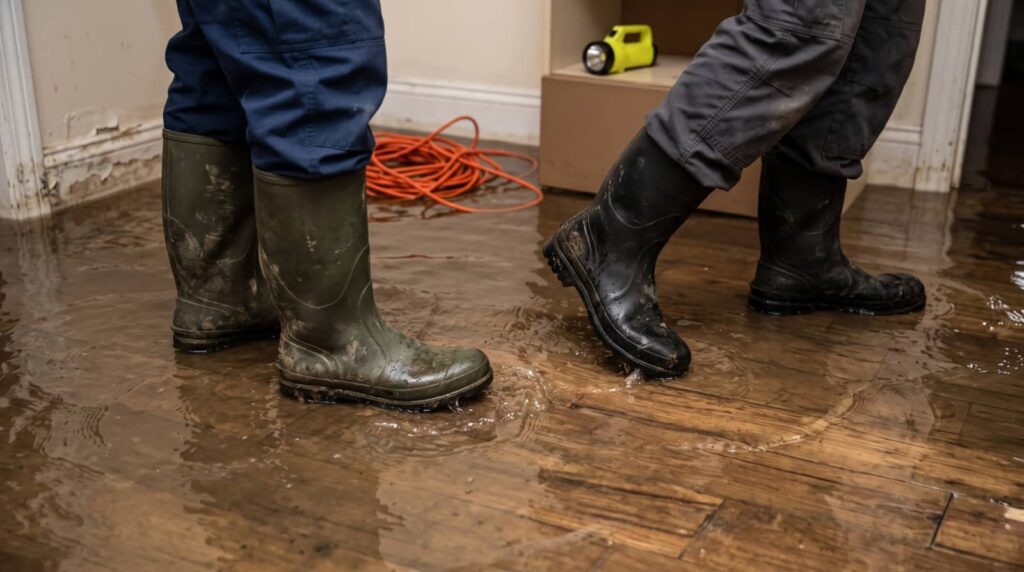
Start with waterproof gloves and boots, and consider respirators to guard against airborne pathogens.
Safety training is important; it helps you understand hazard assessment and the significance of proper gear usage. Regular equipment maintenance prolongs the life of your protective gear, making sure it’s always ready when you need it.
Familiarize yourself with emergency protocols to respond swiftly to any situation. Prioritize health considerations, as exposure to floodwaters can lead to severe health issues.
With the right PPE, you’ll safeguard yourself and contribute to the overall safety of the cleanup team.
Top Accessories for Effective Flood Recovery
After ensuring you’ve got the right PPE, equipping yourself with the right accessories can greatly enhance your flood recovery efforts.
These tools are essential for effective flood recovery strategies and water damage mitigation. Here are three must-have accessories:
Sump Pumps: These help remove standing water quickly, preventing further damage.
Moisture Meters: They accurately measure moisture levels in walls and floors, allowing for targeted drying.
Dehumidifiers: Essential for reducing humidity levels, these devices help prevent mold growth and facilitate faster recovery.
Investing in these accessories streamlines your recovery process and fosters a sense of community as you work alongside others facing similar challenges.
Equip yourself well, and you’ll make a significant impact in restoring affected spaces.
Recommended Waste Disposal Methods for Flood Debris
Proper waste disposal methods for flood debris are essential for maintaining safety and facilitating recovery.
Start by implementing debris segregation; separate organic materials, construction debris, and hazardous waste. This streamlines the cleanup process and ensures compliance with local regulations.
For hazardous waste, like chemicals or contaminated items, contact your local waste management authority for proper disposal guidelines. Use designated containers for hazardous materials to prevent contamination and health risks.
Additionally, consider recycling opportunities for non-hazardous debris, such as metals or plastics.
Always wear protective gear during cleanup to minimize exposure to harmful substances.
The Importance of Water Quality Testing Kits
Flood debris cleanup is incomplete without evaluating the quality of water that may have been contaminated during the event.
Using water quality testing kits is essential for ensuring safety and health. These kits help you identify harmful water contaminants and utilize effective testing methods.
Here are a few key benefits of using water quality testing kits:
Immediate Results: You can quickly determine contamination levels, allowing for timely action.
Comprehensive Testing: Kits often test for a range of contaminants, from bacteria to heavy metals.
User-Friendly: Many kits are designed for non-experts, making them accessible for everyone involved in cleanup.
Frequently Asked Questions
How Can I Assess the Extent of Flood Damage Effectively?
To assess flood damage effectively, start with a detailed damage assessment. Use moisture detection tools to identify hidden water sources and structural issues. Document findings thoroughly to guide recovery efforts and ensure thorough restoration.
What Safety Measures Should I Take Before Starting Cleanup?
Before starting cleanup, gear up with personal protective equipment like gloves and masks. Stock emergency supplies, ensuring you have flashlights and first aid kits. Safety’s your first ally in traversing this hazardous terrain.
How Long Does Flood Cleanup Typically Take?
Flood cleanup typically takes a few days to several weeks, depending on the cleanup timeline and restoration factors like the extent of damage, moisture levels, and your resources. Proper planning can greatly expedite the process.
Can I Clean up Flooding Without Professional Help?
Yes, you can handle DIY cleanup, but prioritize flood safety. Assess the situation, wear protective gear, and ensure the area’s safe before starting. Always stay informed about potential hazards and follow local guidelines for effective recovery.
What Insurance Coverage Is Available for Flood Damage?
You can get flood insurance through the National Flood Insurance Program, which offers coverage limits based on your needs. Review your policy to understand what’s covered and ensure you’re adequately protected against potential flood damage.
Review
In the whirlwind of flood cleanup, having the right equipment is like wielding a superhero’s arsenal. From submersible pumps that could drain oceans to high-powered dehumidifiers that practically suck the moisture out of the air, you’re armed for success. Don’t forget your PPE—it’s your invisible shield against hidden dangers! With these tools at your side, you’re not just cleaning; you’re conquering chaos and restoring order, ensuring your community bounces back like a champion after a championship!