When floodwaters recede, the aftermath can feel like an intimidating mountain to climb. You must prioritize safety before tackling the flood damage cleanup. Each step you take is vital—not just for restoring your space but also for protecting your well-being. Understanding the right approach can make a significant difference. So, what are the essential steps you need to take to effectively navigate this challenging process?
Key Takeaways
- Assess the damage thoroughly by documenting affected areas with notes and photographs for insurance claims.
- Ensure safety by wearing protective gear and checking for hazards like downed power lines and gas leaks.
- Remove standing water using appropriate tools like wet vacuums or sump pumps, ensuring personal safety during the process.
- Dry out the area by setting up fans and dehumidifiers to promote air circulation and moisture removal.
- Document all damages with clear photos and an inventory list to support your insurance claims effectively.
Assess the Damage
When you’re faced with flood damage, it’s essential to assess the situation quickly and thoroughly.
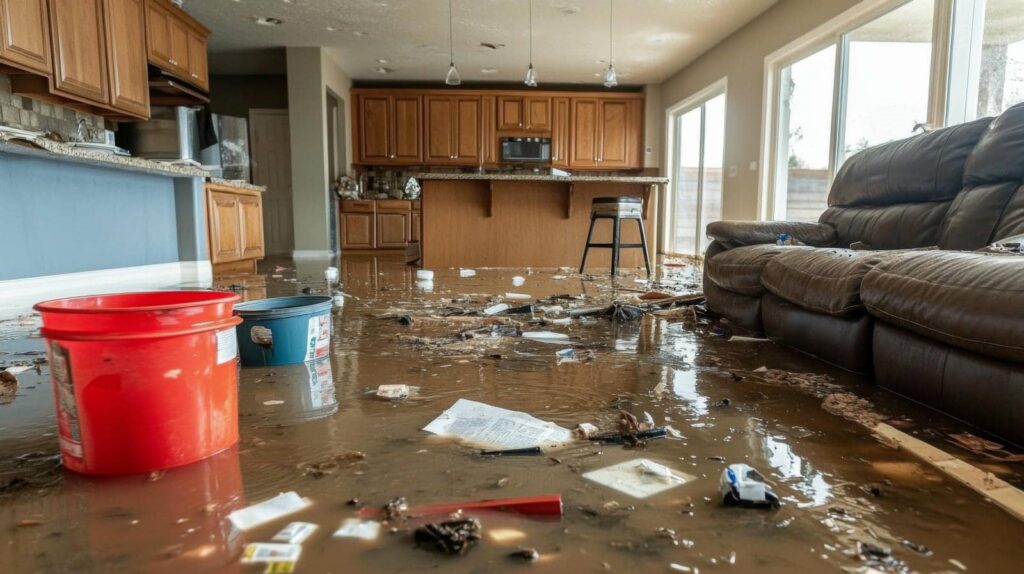
Begin by walking through your property to conduct a damage evaluation. Take detailed notes and photographs of affected areas—this documentation can be vital for your insurance claims later on. Check for structural damage, waterlogged belongings, and hazardous materials, ensuring you’re aware of everything that’s impacted.
Don’t rush this process; a thorough evaluation helps you understand the full extent of the damage and what needs addressing.
Talk to your family and neighbors, as they might’ve valuable insights or similar experiences. Feeling connected to others during tough times can ease the burden.
Ensure Safety First
After evaluating the damage, your next priority should be ensuring safety for yourself and others. Start by gauging potential hazards, like downed power lines or unstable structures.
Your personal safety is paramount, so don’t hesitate to wear protective gear, such as gloves and boots, when maneuvering through debris. If you smell gas or see flooding in electrical areas, evacuate immediately and contact professionals.
Emergency preparedness is essential in these situations. Keep a first aid kit accessible and have a plan for communication with family and friends.
Make sure you know where to find emergency services, and consider joining local community groups for support. Remember, you’re not alone in this; reaching out for help is a sign of strength.
Taking these precautions not only protects you but also fosters a sense of belonging as you journey through recovery together with your community.
Stay safe and take care of each other.
Remove Standing Water
To effectively tackle flood damage, it’s essential to remove standing water as soon as possible, since stagnant water can lead to mold growth and further structural damage.
Start by evaluating the depth of the water. For shallow areas, use mops and buckets; however, for deeper water, consider employing water extraction techniques like wet vacuums. If you’re facing significant flooding, sump pump options can be a lifesaver. Portable sump pumps can quickly remove large volumes of water, minimizing damage to your home.
Don’t forget to wear protective gear while you work—your safety is a priority.
Remember, you’re not alone in this; many have faced similar challenges and found solutions. Reaching out to friends or professionals can also provide support and guidance during this stressful time.
Once you’ve removed the standing water, you’ll be ready to move on to the next steps in your cleanup process.
Dry Out the Area
Once you’ve removed standing water, drying out the area becomes your next priority. This step is essential to prevent mold growth and further damage.
Utilize effective water removal techniques and drying equipment options to get the job done efficiently. Here’s how to tackle it:
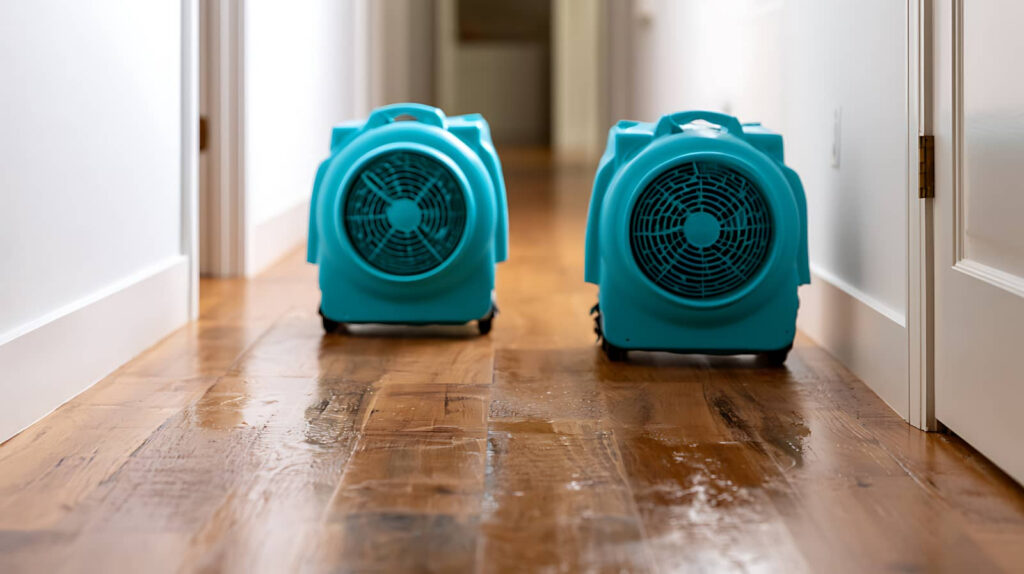
- Set up fans to circulate air and speed up drying.
- Use dehumidifiers to extract moisture from the air.
- Open windows and doors for natural ventilation.
- Place absorbent towels or mats in wet areas.
- Check for hidden moisture in walls and floors using a moisture meter.
Sanitize Affected Surfaces
Sanitizing affected surfaces is essential to eliminate harmful bacteria and prevent health risks after a flood. Start by gathering the proper equipment—rubber gloves, masks, and disinfectants are key.
You’ll want to disinfect surfaces thoroughly, including floors, walls, and any items that came into contact with floodwater.
Begin with a thorough cleaning to remove dirt and debris. Once that’s done, apply a disinfectant following the manufacturer’s instructions. Pay special attention to high-touch areas like doorknobs, switches, and countertops, as these can harbor pathogens.
Don’t forget to ventilate the area while you work; fresh air helps keep the environment safe.
It’s not just about cleaning—it’s about restoring your space to a healthy state. Knowing you’re taking these steps helps you reclaim your home and peace of mind.
You’re not alone in this; everyone in your community understands the importance of a safe environment.
Document the Damage
After a flood, it’s vital to document the damage for insurance claims and recovery efforts.
Take clear photographs of affected areas and items, and keep a detailed inventory of everything that’s been damaged.
This evidence will help you communicate effectively with your insurance provider and ensure you receive the support you need.
Take Photographic Evidence
While dealing with the aftermath of a flood, documenting the damage through photographs is essential for both insurance claims and recovery efforts.
Using effective photographic techniques can help ensure evidence preservation. Here’s what you should focus on:
- Wide-angle shots of affected rooms
- Close-ups of water damage on walls and floors
- Images of damaged personal belongings
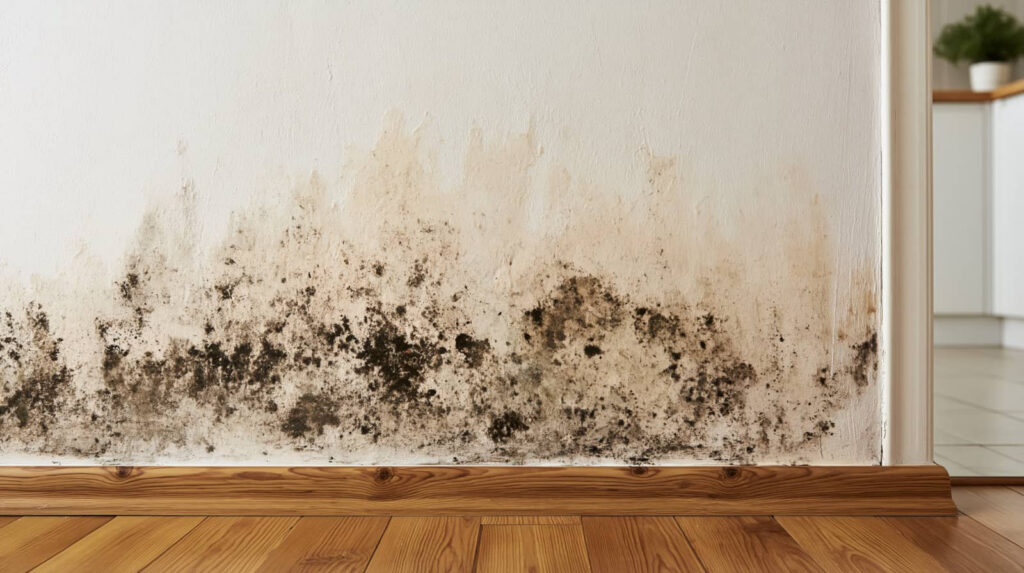
- Photos of mold or mildew growth
- Snapshots of any structural issues, like cracks
These visuals tell your story and support your claims.
Remember to capture the emotional impact too; it helps convey the true extent of the loss.
Keep Detailed Inventory
Keeping a detailed inventory of all damaged items is vital for your recovery process. This step aids in inventory management and ensures you have a thorough record for insurance claims.
Start by listing each item, noting its condition and estimated value. Photograph damaged belongings alongside your written notes for accurate damage tracking. This documentation can be emotionally taxing, but it’s an important part of moving forward.
Remember, you’re not alone in this; many have faced similar challenges and emerged stronger. By taking the time to create an inventory, you’re laying the groundwork for rebuilding your life and home.
Stay organized, and don’t hesitate to seek support from friends and family during this tough time.
Contact Professionals for Help
When dealing with flood damage, reaching out to professionals is essential for effective cleanup and restoration. You might feel overwhelmed, but these experts are trained to handle the situation efficiently and safely.
Consider the benefits of hiring flood restoration and emergency services:
Thorough Assessment: They’ll evaluate the extent of the damage accurately.
Advanced Equipment: Professionals use specialized tools for water extraction and drying.
Mold Prevention: They implement measures to prevent mold growth, keeping your home safe.
Insurance Assistance: Experts can help navigate insurance claims, easing your financial burden.
Peace of Mind: Knowing experienced professionals are on the job allows you to focus on recovery.
Don’t hesitate to reach out for help. Connecting with the right team can make all the difference, helping you restore your home and regain a sense of normalcy.
You’re not alone in this—support is just a call away.
Frequently Asked Questions
How Long Does It Take for a Home to Dry Completely After Flooding?
It usually takes several days to weeks for your home to dry completely after flooding. Regular moisture assessments during the drying process help ensure you’re on track to restore your space safely and effectively.
Can I Use a Regular Vacuum for Water Extraction?
You can’t use a regular vacuum for water extraction; it’ll short-circuit like a toaster in a rainstorm. Instead, opt for a wet/dry vacuum designed for handling liquid. Your home deserves the right tools for recovery.
What Types of Insurance Cover Flood Damage Cleanup Costs?
Flood insurance types, like the National Flood Insurance Program (NFIP) and private policies, often cover cleanup costs. However, you’ll need to check your coverage limits to ensure you’re adequately protected during recovery. You’re not alone in this.
Are There Any DIY Methods for Mold Prevention After Flooding?
You can use DIY solutions like vinegar, baking soda, and hydrogen peroxide to prevent mold after flooding. Ensure proper ventilation, keep surfaces dry, and regularly inspect for moisture to protect your space and loved ones.
How Do I Know When It’s Safe to Re-Enter My Home?
Wait until local authorities declare it safe, checking for flood safety signs like stable structures and no lingering water. Follow re-entry guidelines to verify your home is secure and free from hazards before stepping inside.
Recap
In the aftermath of a flood, remember that you’re not alone—millions of homes in the U.S. are at risk of flooding each year. By following these quick tips, you can efficiently tackle the cleanup and protect your property. Prioritize safety, document the damage, and don’t hesitate to reach out for help. Taking these steps aids recovery and helps you regain control during a challenging time. Stay strong; brighter days are ahead.