Floods can devastate properties, but with the right approach, you can restore your space effectively. First, you need to assess the flood damage and ensure safety before moving forward. Removing standing water is vital, but it’s only the beginning of the cleanup process. Understanding the next steps can make all the difference in reducing long-term risks and costs. What actions should you prioritize to ensure a thorough restoration?
Key Takeaways
- Assess damage and document affected areas for insurance claims, categorizing items as salvageable or non-salvageable.
- Remove standing water quickly with pumps or vacuums, and improve ventilation to promote drying.
- Clean and sanitize all affected areas using appropriate cleaning solutions, testing them beforehand on small surfaces.
- Repair structural damage, replacing compromised materials with water-resistant options, and ensuring compliance with local building codes.
- Implement preventive measures, such as proper grading and gutter maintenance, to minimize future flooding risks.
Assessing the Damage
When evaluating the damage after a flood, you should start by documenting the affected areas and belongings. Conduct a thorough damage evaluation to identify structural issues, waterlogged furniture, and ruined appliances.
Take detailed photographs and notes for your records, ensuring you capture all angles and damages.
Next, categorize your belongings into salvageable and non-salvageable items. This step’s essential for your insurance claims process, as it helps establish the extent of your loss.
Be precise in describing the condition of each item and any inherent value.
Once you have a detailed inventory, contact your insurance provider. Provide them with the documentation you’ve gathered to support your claims.
Promptly submitting this information can expedite your claim process, helping you recover from the loss more efficiently.
Ensuring Safety First
Before starting cleanup, assess the structural integrity of your building to ensure it’s safe to enter.
Always wear protective gear to shield yourself from hazards.
Avoid contact with contaminated water, as it may pose serious health risks.
Assess Structural Integrity
Evaluating structural integrity after a flood is essential for ensuring safety.
Begin your integrity assessment by inspecting visible damage to walls, floors, and ceilings. Look for cracks, warping, or signs of sagging, which may indicate compromised stability. Check load-bearing elements and foundations, as these are critical to your structure’s safety.
If you’re unsure about anything, consult a professional for a thorough structural evaluation. Don’t overlook utilities; ensure electrical systems and plumbing are intact.
Document all findings and prioritize repairs based on severity to prevent further issues. Remember, safety is paramount—never enter a building you suspect is unsafe until a qualified expert has assessed it.
Wear Protective Gear
After evaluating structural integrity, the next step in flood damage cleanup involves prioritizing your safety.
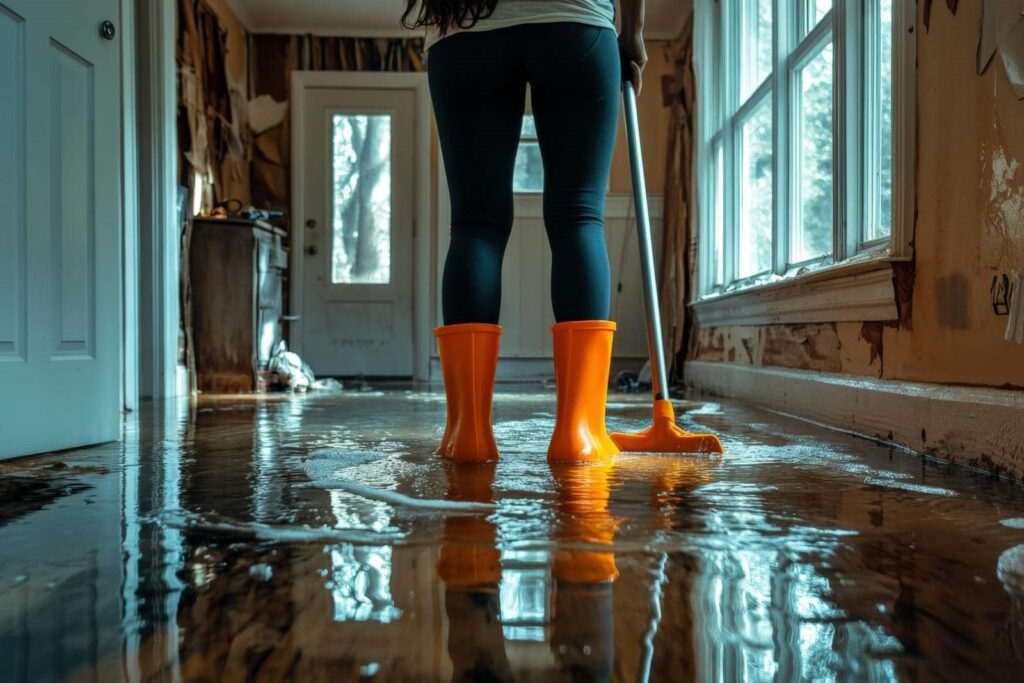
Wearing the right protective gear is essential to shield yourself from potential hazards. Start with durable protective clothing, like waterproof boots and gloves, to prevent exposure to contaminants. A mask can help filter out dust and mold spores, while goggles safeguard your eyes from debris.
Verify your safety equipment is in good condition and fits properly; this promotes mobility and comfort during cleanup. Don’t cut corners—invest in quality gear that meets safety standards.
By taking these precautions, you not only protect yourself but also contribute to a safer environment for everyone involved in the cleanup process.
Safety first makes a difference.
Avoid Contaminated Water
As you begin the cleanup process, it’s crucial to stay clear of contaminated water to protect your health. Floodwaters often contain harmful substances and waterborne pathogens that can pose serious health risks.
Always assess the situation before moving forward. If you encounter standing water, assume it’s contaminated, and avoid direct contact. Use appropriate barriers, like boots and gloves, to minimize exposure, but remember that these don’t ensure safety against pathogens.
Always prioritize flood safety by following local advisories and guidelines. If you must enter potentially contaminated areas, consider using water testing kits to evaluate the risks.
Finally, wash thoroughly after any contact, ensuring you remove any contaminants to safeguard your health and well-being during this process.
Removing Water and Moisture
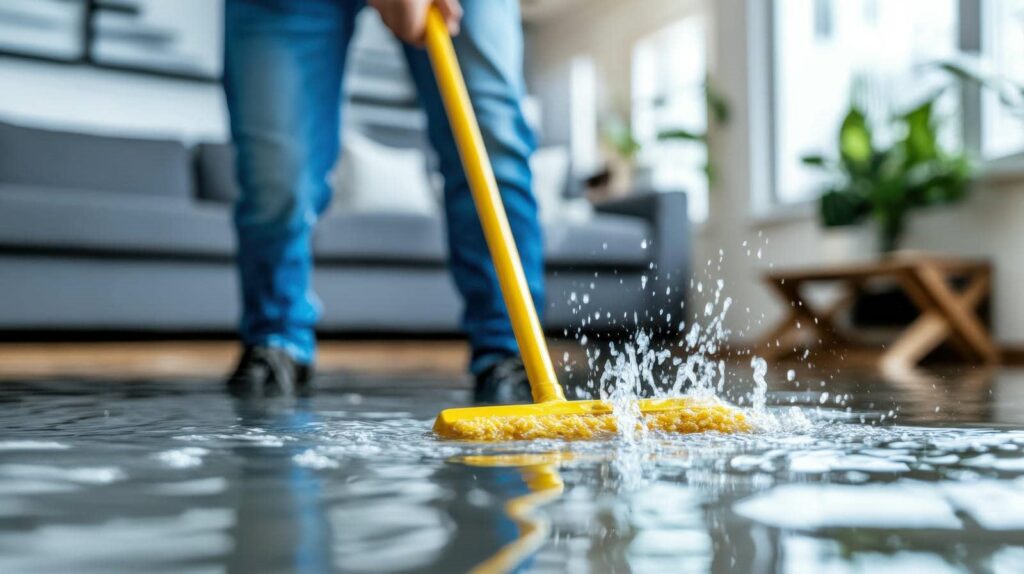
To effectively remove water and moisture after a flood, you need to act quickly and methodically. Start with water extraction; use a sump pump or wet/dry vacuum to remove standing water. Make sure you’re wearing protective gear to safeguard against contaminants.
Once visible water is gone, focus on moisture control. Open windows and doors to improve ventilation, and set up fans or dehumidifiers to accelerate drying.
Check hidden areas like under flooring and behind walls, as moisture can linger and cause mold growth. Use moisture meters to assess dampness in materials, verifying that all affected areas are adequately dry.
Keep a close eye on humidity levels; ideally, you want them below 60%. Remember, thorough water and moisture removal is essential to prevent long-term damage.
Cleaning and Sanitizing Affected Areas
After removing water, you need to assess the extent of damage to determine what areas require cleaning and sanitizing.
Choose appropriate cleaning solutions based on the surfaces and contaminants present.
Finally, disinfect all affected surfaces to eliminate any harmful pathogens.
Assessing Damage Extent
When floodwaters recede, it’s essential to quickly assess the extent of the damage to effectively clean and sanitize affected areas.
Start with a thorough damage evaluation, focusing on both structural and personal property impacts. Inspect walls, floors, and ceilings for water saturation, mold, or structural integrity loss. Record the flood impact on electrical systems, plumbing, and appliances; this will guide your cleanup process.
Look for signs of contamination, especially in porous materials like carpet or drywall. Prioritize areas based on severity, ensuring you address the most affected first.
Document everything for insurance claims and recovery plans. By systematically evaluating the damage, you’ll create a roadmap for your flood damage cleanup, ensuring a safe and efficient recovery process.
Choosing Cleaning Solutions
Selecting the right cleaning solutions is crucial for effectively sanitizing areas impacted by flood damage. Start by considering eco-friendly solutions, which minimize environmental impact while still providing adequate cleaning power. Look for products that are biodegradable and free from harsh chemicals.
Always prioritize chemical safety; read labels carefully to confirm you’re using the correct concentration and application method. Protective gear, like gloves and masks, is essential when handling any cleaning agents. Test any solution on a small, inconspicuous area first to avoid damage.
Finally, consult with professionals if you’re unsure about which products are most effective for your specific situation. By making informed choices, you’ll contribute to a healthier environment while confirming your space is safe and sanitized.
Disinfecting Contaminated Surfaces
To effectively disinfect contaminated surfaces after a flood, it’s essential to act quickly and methodically.
Start by wearing protective gear, including gloves and a mask, to ensure your safety. Use disinfecting methods such as a bleach solution (1 cup of bleach per gallon of water) or EPA-approved disinfectants.
Apply these solutions generously to all affected surfaces, including floors, walls, and countertops. Allow the disinfectant to sit for at least 10 minutes before rinsing.
For porous materials, consider replacing them entirely, as they can harbor bacteria. After surface treatments, ensure proper ventilation to facilitate drying.
Regularly check for mold growth in the following weeks, as it can develop rapidly in damp conditions. Maintaining a clean environment is essential for your health and peace of mind.
Repairing and Restoring Damaged Structures
Restoring structures damaged by flooding requires a systematic approach to ensure safety and longevity. Begin by evaluating the extent of the damage. Identify any structural repairs needed before you move on to restoration techniques. Focus on repairing foundations, walls, and roofs, ensuring they meet local building codes. If materials are compromised, replace them with water-resistant options to enhance durability.
Next, dry out the area thoroughly. Use dehumidifiers and fans to eliminate moisture, preventing mold growth. Once the space is dry, you can implement restoration techniques like refinishing surfaces, repainting, or replacing flooring.
Don’t forget to check electrical and plumbing systems; hire professionals if necessary.
Throughout the process, keep communication open within your community. Share your experiences and seek advice from others who’ve faced similar challenges. This collective knowledge can be invaluable for anyone working to restore their homes after flooding.
Preventing Future Flooding Issues
Although flooding can be unpredictable, you can take proactive steps to minimize future risks. Start by evaluating your property’s landscape. Ascertain proper grading directs water away from your foundation. Implement flood prevention measures like installing rain gardens or permeable paving to absorb excess water.
Next, consider effective drainage solutions. Clean gutters and downspouts regularly to prevent blockages, and extend downspouts at least six feet from your home. If you’re in a flood-prone area, invest in a sump pump or consider a French drain system to manage groundwater.
Additionally, check your insurance policy to verify adequate coverage for flood damage. Join community efforts aimed at improving local drainage infrastructure, fostering a shared sense of belonging and responsibility.
Frequently Asked Questions
How Long Does Flood Damage Cleanup Typically Take?
Flood damage cleanup typically takes one to three weeks, depending on the extent of the damage. Your restoration timeline may vary, but staying organized and proactive helps ensure a smoother, quicker recovery.
Can I File an Insurance Claim for Flood Damage?
Yes, you can file an insurance claim for flood damage. Review your insurance policy for coverage details, then follow the claim process to ensure you document everything thoroughly and maximize your potential reimbursement.
What Personal Protective Equipment Should I Use During Cleanup?
You should wear protective gear like gloves, masks, goggles, and waterproof boots during cleanup. These safety measures help shield you from contaminants and minimize health risks, ensuring you stay safe while restoring your environment.
How Do I Find a Reputable Flood Damage Restoration Company?
To find a reputable flood damage restoration company, check company reviews, ask for referrals, and compare services. Following flood restoration tips can guide your decisions, ensuring you choose a trustworthy partner for recovery.
Are There Specific Regulations for Flood Cleanup in My Area?
Yes, you’ll need to check local regulations regarding flood cleanup. Often, cleanup permits are required to ensure compliance. Contact your local authorities or visit their website for specific guidelines tailored to your area.
Wrap-Up
In the aftermath of a flood, think of your home as a ship that’s weathered a storm. By meticulously following these essential steps, you can navigate the turbulent waters of cleanup and restore your sanctuary. Prioritize safety, remove the moisture, and sanitize your space to ward off lingering threats. Finally, safeguard your vessel against future tempests with preventive measures and robust insurance. With diligence and care, you’ll ensure your home is ready for whatever comes next.