When floodwaters recede, you need to act quickly to minimize damage. First, assess the situation and document everything for insurance. Safety is paramount—turn off power and wear protective gear. With the right tools, you can start the repair process efficiently. From water extraction to drying out your home, every step matters. Curious about how to tackle the structural damage next?
Key Takeaways
- Assess visible damage thoroughly and document findings with photos for insurance claims.
- Ensure safety by turning off power and wearing protective gear before entering flooded areas.
- Extract water using appropriate tools like submersible pumps or wet/dry vacuums to minimize damage.
- Dry out affected areas with dehumidifiers and high-velocity fans to prevent mold growth.
- Inspect and repair structural damage promptly to maintain safety and integrity of the property.
How to Assess Flood Damage Quickly and Accurately
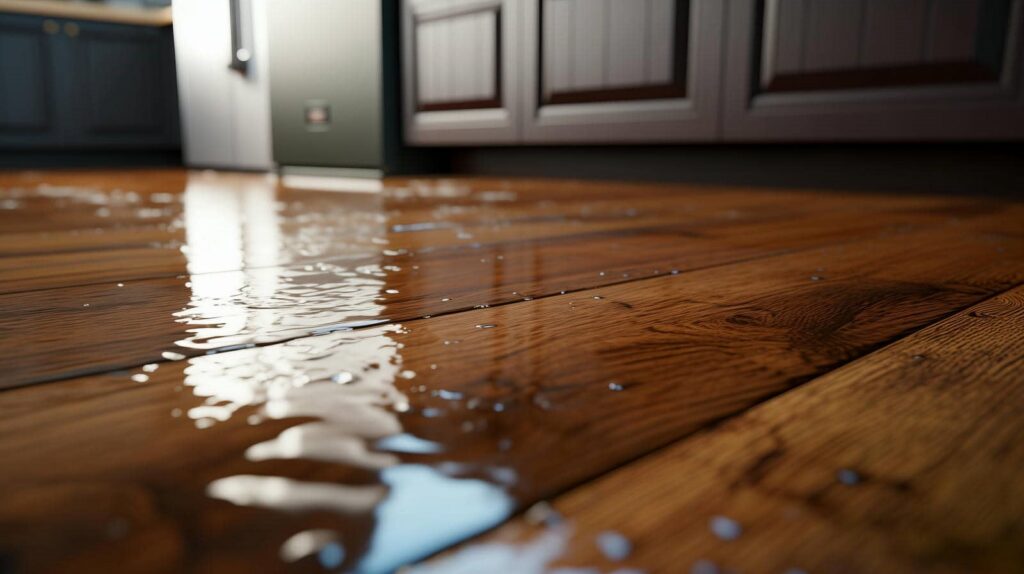
When disaster strikes, evaluating flood damage quickly and accurately is vital. Start by surveying your property methodically. Look for visible signs of damage, such as water stains, mold growth, or structural issues.
Make a list of affected areas to ensure nothing gets overlooked during your damage assessment. Take photos for documentation, as these can be important for insurance claims.
Prioritize your evaluation by focusing on critical areas like electrical systems and plumbing, which can pose safety risks. If possible, enlist help from trusted friends or neighbors to speed up the process.
A quick evaluation helps you understand the scope of the damage, guiding your next steps in recovery and repairs. Remember, timely action can make a significant difference.
What Safety Steps Should You Take Before Repairs?
Before diving into repairs, ensure your safety by taking essential precautions. First, turn off the power to your home at the circuit breaker. Floodwater can create electrical hazards, and it’s vital to avoid any risk of shock.
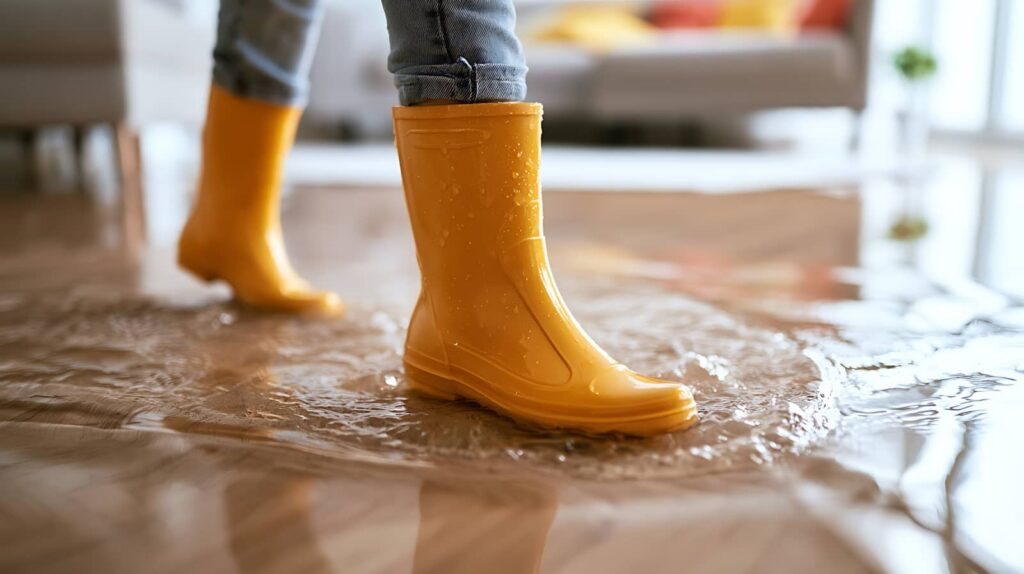
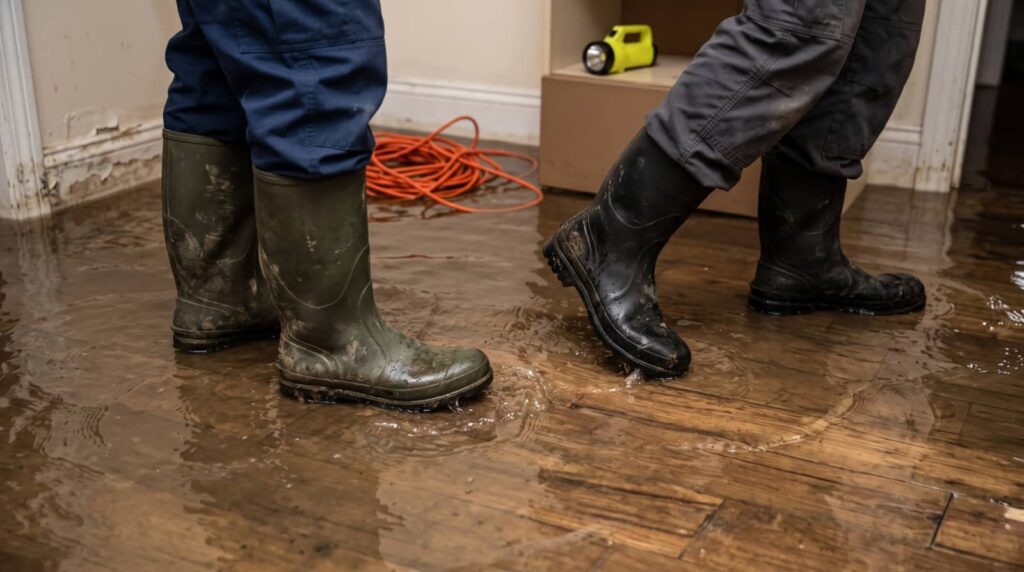
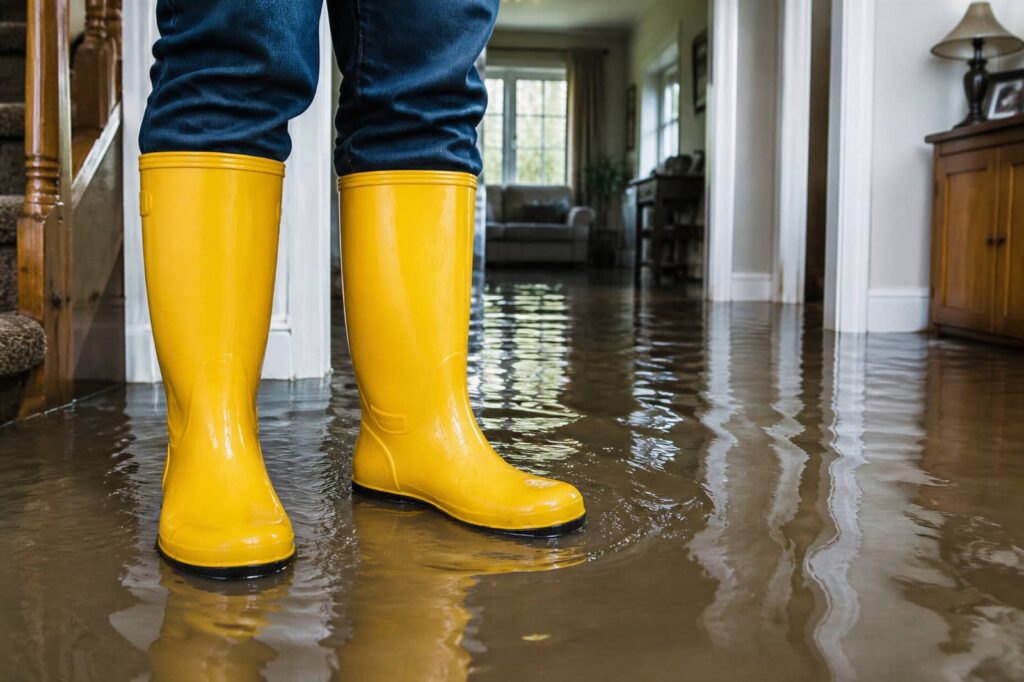
Next, wear appropriate protective gear like gloves and boots to shield yourself from contaminants and sharp objects. Ascertain the area is well-ventilated to help reduce mold growth.
If the floodwater has risen considerably, check for structural damage before entering; it’s smart to have a professional evaluate the safety of your space.
Finally, keep a first aid kit handy. By prioritizing these safety precautions, you’ll create a safer environment for yourself and others while tackling the repairs.
Must-Have Tools and Supplies for Effective Flood Repairs
When tackling flood repairs, having the right tools and supplies is essential.
You’ll need essential safety gear to protect yourself, water extraction equipment to remove standing water, and drying tools to prevent mold.
With these items on hand, you can effectively address the damage and start the recovery process.
Essential Safety Gear
Effective flood repairs hinge on having the right safety gear and tools at your disposal. Start with protective clothing, like waterproof coveralls, to shield yourself from contaminants and moisture. This keeps you safe and comfortable while you work.
Don’t forget sturdy waterproof boots; they’re essential for traversing flooded areas without risking slips or injuries. A good pair will also keep your feet dry and protected from debris.
Additionally, consider gloves and goggles to guard against sharp objects and harmful substances. Having these essentials in your toolkit protects you and allows you to focus on the task at hand.
When you’re equipped properly, you’ll feel more confident tackling those flood repairs.
Water Extraction Equipment
Water extraction is essential for effective flood repairs, and having the right equipment can make all the difference.
Start with water pumps; they’re important for removing large volumes of water quickly. Choose a submersible or utility pump depending on the depth and scale of the flooding.
Extraction vacuums are another must-have, as they can tackle residual water and moisture from carpets and hard surfaces. Look for models designed specifically for water removal, ensuring they’ve adequate suction power.
Together, these tools help you act swiftly to minimize damage and protect your home.
Drying and Dehumidifying Tools
To successfully dry out your space after a flood, you’ll need a few essential drying and dehumidifying tools.
Start with a reliable dehumidifier; understand the different dehumidifier types—portable and whole-house options can fit various needs.
Next, invest in high-velocity fans to enhance air circulation, speeding up drying times.
Utilize drying techniques like thermal imaging to identify hidden moisture. Absorbent towels and moisture meters are also invaluable for pinpointing damp areas and ensuring thorough drying.
As you tackle the aftermath, remember that proper ventilation is key—open windows and doors when possible.
With the right tools, you’ll create a safe environment for your home and loved ones, making recovery feel achievable and collaborative.
Water Extraction: A Step-by-Step Guide
Start by evaluating the area affected by flooding to determine the extent of the damage and the amount of water present.
Once you’ve assessed the situation, choose effective water removal techniques. Use a submersible pump for larger volumes of water and a wet/dry vacuum for smaller areas.
Next, remove any furniture or belongings to prevent further damage.
After that, focus on flood cleanup strategies, like using mops and towels to soak up residual water. Make sure you wear protective gear, as floodwaters can contain harmful contaminants.
Finally, keep an eye out for hidden pockets of water, such as behind walls or under floors. Properly extracting water is essential to avoid mold and structural issues down the line.
Best Methods for Drying Your Home Post-Flood
Once you’ve extracted the water, it’s crucial to dry your home as quickly as possible to prevent mold growth and additional damage.
Start by opening windows and doors to enhance airflow. Use fans and dehumidifiers to boost moisture control; these devices help pull damp air out and keep your space dry.
Remove soaked carpets and furniture to prevent further saturation. For preventive measures, consider treating surfaces with mold-resistant products.
Regularly check hidden areas like under cabinets or behind appliances, as moisture can linger there. If the humidity remains high, you might need to call in professionals who specialize in flood recovery.
How to Repair Flood Damage to Your Home’s Structure
Evaluating the structural damage after a flood is essential for a safe and effective repair process. Start by inspecting the foundation and walls for cracks or signs of shifting. If you notice any issues, it’s vital to prioritize foundation reinforcement to maintain your home’s structural integrity.
You can use steel brackets or piles to stabilize the foundation, ensuring it can support the weight of your home. Next, check load-bearing beams and joists, replacing any that are severely damaged.
Don’t forget to assess the roof and windows, as leaks can lead to further problems. By addressing these areas promptly, you’ll help protect your home from future issues and create a safer environment for you and your family.
When to Call in Professional Help for Flood Damage?
How can you determine when it’s time to call in the pros for flood damage? First, if your damage assessment reveals significant structural issues, don’t hesitate. Cracks in walls or ceilings, warped floors, or compromised foundations can indicate serious problems that require expert attention.
Second, if water levels exceed a few inches or if you’re unsure about the safety of your home, professional services are essential. They’ve the equipment and expertise to handle extensive water removal and mold prevention.
Lastly, if you feel overwhelmed or lack the time to manage repairs, reaching out for help is a smart choice.
Frequently Asked Questions
How Can I Prevent Future Flooding in My Home?
To prevent future flooding, install proper drainage systems and sump pumps. Use flood barriers around your home and ensure landscape grading directs water away. These steps will help protect your space and keep it dry.
Will My Homeowner’s Insurance Cover Flood Damage Repairs?
Your homeowner’s insurance likely won’t cover flood damage unless you have specific flood insurance. Check your policy for coverage limits, as they vary. Understanding these details helps you prepare for future flooding effectively.
What Health Risks Are Associated With Floodwater?
Floodwater poses serious health risks, including waterborne illnesses and mold growth. You should avoid contact with contaminated water, ensure proper sanitation, and address any moisture quickly to protect your health and your family’s well-being.
How Long Does It Typically Take to Repair Flood Damage?
Typically, the flood repair timeline ranges from a few days to several weeks, depending on the damage’s extent. You’ll navigate the restoration process step-by-step, ensuring your space returns to its safe, functional state.
Can I Salvage My Belongings After a Flood?
Yes, you can salvage items after a flood. Use effective restoration techniques like cleaning and drying to restore belongings. Act quickly, as prompt action increases the chance of saving your valued possessions from damage.
Summary
In the face of flood damage, act quickly and methodically. Assess the situation, prioritize safety, and gather your tools. Extract the water, dry the affected areas, and repair structural issues. Don’t hesitate to call in professionals if the damage feels overwhelming. By staying organized and proactive, you can restore your home efficiently and effectively. Remember, every step you take brings you closer to recovery and peace of mind. Stay safe, stay focused, and rebuild.