Just as a ship needs a sturdy anchor in a storm, you need reliable support during a flood crisis. When water invades your home, every moment counts. You may feel overwhelmed, but knowing there’s a 24/7 emergency flood damage repair solution can make all the difference. Understanding how to act quickly and effectively is vital to minimizing damage. Are you prepared to navigate the next steps when disaster strikes?
Key Takeaways
- 24/7 availability ensures immediate response to flood emergencies, minimizing damage and initiating recovery quickly.
- Qualified repair teams bring expertise and advanced equipment for effective flood damage assessment and repair.
- Rapid mobilization of resources supports timely interventions, reducing long-term impacts on property and health.
- Clear communication throughout the repair process provides peace of mind during stressful situations.
- Documenting damage promptly aids in insurance claims and facilitates a smoother recovery process.
Why Flood Damage Matters
Flood damage matters because it can have lasting effects on both your home and health. When water invades your space, it compromises your property and your emotional well-being.
Implementing effective flood prevention strategies is vital to protect what you cherish. This means evaluating your home’s vulnerabilities and considering measures like proper drainage and landscaping.
Moreover, emergency response planning is important. By having a clear plan in place, you can act quickly and minimize damage. Knowing whom to call and what steps to take can make a significant difference during a crisis.
Signs Your Home Needs Emergency Repair
If you notice unusual water accumulation around your home, it’s a sign something might be wrong.
Additionally, watch for any signs of mold growth, as this can indicate hidden moisture issues.
Staying alert to these symptoms can help you catch problems early and protect your home.
Unusual Water Accumulation
When unexpected water starts pooling in your home, it’s a clear sign that emergency repairs are needed. This accumulation can indicate serious issues like a broken pipe or inadequate drainage solutions.
You might notice water collecting in basements, near windows, or around appliances. Don’t ignore these signs; they can lead to more significant damage if left untreated.
It’s essential to act quickly to prevent further complications. Check for any visible leaks or damp spots, and consider consulting a professional for a thorough assessment.
Mold Growth Indicators
Mold growth can sneak up on you, especially in damp areas of your home. Recognizing the signs early is essential for effective mold prevention and maintaining a healthy space.
Here are three indicators that you need emergency repair:
Musty Odor: A persistent, earthy smell often signals hidden mold growth.
Visible Spots: Dark or discolored patches on walls, ceilings, or floors indicate moisture issues.
Increased Indoor Humidity: If your home feels unusually humid, it’s time to investigate further.
Don’t let mold compromise your comfort and safety. By addressing these signs swiftly, you can protect your home and create a welcoming environment for everyone.
What to Do Immediately After Flood Damage?
After a flood, your first step is to assess the damage to your property.
Make sure you prioritize safety by avoiding standing water and checking for hazards.
Taking these actions quickly can help you minimize further loss and protect your well-being.
Assess The Damage
Even though the shock of flooding can be overwhelming, it’s important to assess the damage as soon as it’s safe to do so. A thorough damage assessment helps you understand the extent of the destruction and plan your next steps.
Here’s how to start your property evaluation:
Document Everything: Take photos and notes of all affected areas, including furniture and appliances.
Check for Structural Damage: Look for cracks, shifts, or other signs of instability in walls and floors.
Identify Water Sources: Determine where the water entered your home to prevent future issues.
Prioritize Safety Measures
As you navigate the aftermath of a flood, prioritizing safety is essential to protect yourself and your loved ones.
First, verify everyone’s safe by following emergency protocols—stay away from flooded areas and avoid downed power lines.
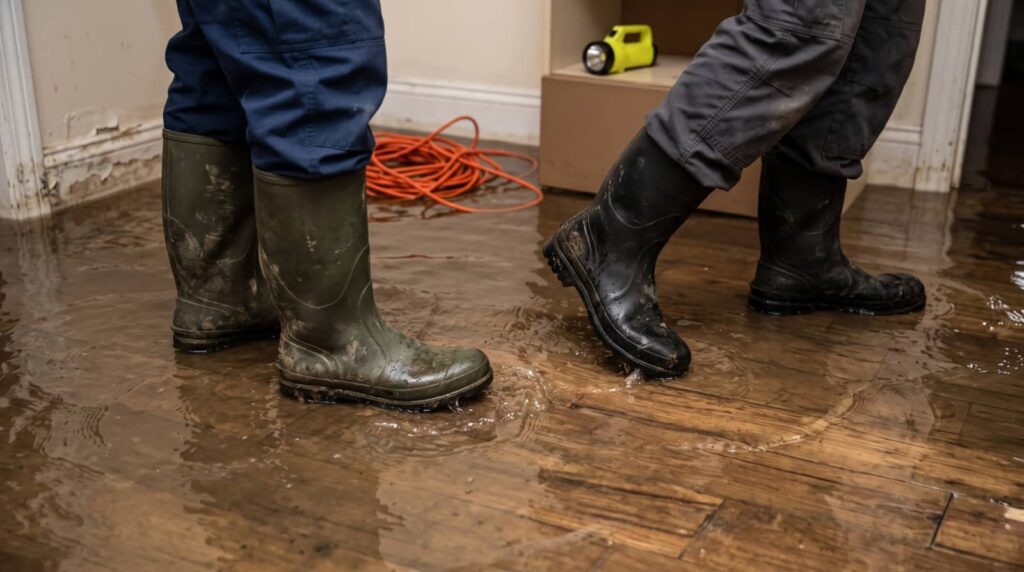
If you need to enter your home, wear safety equipment like gloves and boots to prevent injuries and contamination.
Check for gas leaks and turn off utilities if necessary.
Don’t forget to document the damage for insurance claims, but only when it’s safe to do so.
Reach out to local authorities for resources and assistance.
Step-by-Step Guide to Flood Damage Repair
When floodwaters recede, you might feel overwhelmed by the damage left behind, but taking immediate action is essential to minimize further issues.
Here’s a step-by-step guide to help you navigate the repair process:
Assess the Damage: Document everything for your flood insurance claim. Take photos and make notes on affected areas.
Remove Water: Use pumps or wet vacuums to eliminate standing water. The quicker you act, the shorter your restoration timeline will be.
Dry Out: Open windows and use fans or dehumidifiers. This prevents mold growth and further damage.
How to Pick the Best Flood Repair Team
After taking initial steps to assess and address the damage, finding the right flood repair team becomes essential.
Start by checking their flood repair qualifications; verify they’re certified and experienced in handling similar situations. Look for reviews and testimonials from previous clients to gauge their reliability and professionalism.
Pay attention to their emergency response time—quick action can make a significant difference in minimizing damage. Reach out for estimates and ask about their process to ensure transparency.
A compassionate team will understand your stress and communicate clearly throughout the repair. By choosing wisely, you’ll feel supported and confident in the restoration process, knowing you’ve got a dedicated team working to restore your home.
Avoid These Common Flood Damage Repair Mistakes
Flood damage repair can be overwhelming, and it’s easy to make mistakes that can exacerbate the situation. To help you navigate this challenging process, keep these common pitfalls in mind:
Neglecting professional consultations: Skipping expert advice can lead to poor equipment selection and costly errors in your restoration timeline.
Ignoring local regulations: Failing to comply can delay your insurance claims and complicate post-repair maintenance.
Underestimating DIY risks: Taking on too much yourself might seem tempting, but it can result in more damage and increased costs.
Key Tools for Effective Flood Damage Repair
Effective flood damage repair hinges on having the right tools at your disposal.
You’ll want to start with water extraction techniques, like powerful pumps and vacuums, to clear standing water quickly.
Next, consider drying equipment options such as dehumidifiers and air movers to prevent mold growth.
Equip yourself with essential restoration process tools, including saws and sledgehammers, for structural repairs.
Don’t forget safety gear essentials—gloves, masks, and boots—to protect yourself during the process.
Use damage assessment instruments to evaluate the extent of the harm, allowing for informed decisions.
Finally, mold remediation supplies will be vital in ensuring your space becomes safe and livable again.
Having these tools aids in recovery and fosters a sense of community support.
Understanding the Costs of Flood Damage Repair
When you face the aftermath of a flood, understanding the costs of damage repair becomes essential for planning your recovery. Knowing what to expect can ease your stress.
Here are three key factors to take into account:
Repair Costs: Evaluate material expenses and labor fees. These can vary based on the extent of the damage and local rates.
Insurance Coverage: Check your policy to see what’s covered. Understanding this can help you avoid unexpected expenses.
Restoration Timelines: Get contractor quotes to estimate how long repairs will take. This affects your financial planning and may require emergency funds.
Conduct a thorough damage assessment to ensure you’re prepared for the journey ahead.
You’re not alone in this; support is available.
Why 24/7 Availability for Flood Repairs Matters
Having a reliable team on call around the clock can make all the difference in flood repair situations.
When disaster strikes, you need immediate emergency response to minimize damage and start your recovery journey. A 24/7 availability means help is just a call away, no matter the hour.
This rapid recovery approach ensures that you won’t face the aftermath alone, providing you with the support and expertise you need during a stressful time.
Knowing that professionals are ready to assist you can ease your worries and foster a sense of belonging within your community.
Don’t underestimate the importance of prompt action; your home and peace of mind deserve the best care, whenever it’s needed.
Frequently Asked Questions
What Types of Insurance Cover Flood Damage Repairs?
Flood insurance types, like National Flood Insurance Program (NFIP) and private policies, cover damage repairs. Check your coverage limits carefully, as they vary considerably and can impact your financial recovery after a flood.
How Long Does Flood Damage Repair Typically Take?
Typically, the flood repair timeline spans from a few days to several weeks, depending on the severity. The restoration process can feel overwhelming, but you’re not alone.
Can I Prevent Future Flood Damage?
You can prevent future flood damage by implementing flood proofing techniques like elevating utilities and using flood barriers. Additionally, invest in effective drainage solutions to redirect water away, ensuring your home stays safe and dry.
What Should I Salvage After a Flood?
You might think everything’s ruined, but focus on flood salvage priorities. Save essential items like documents, electronics, and sentimental belongings first. These items can help you rebuild and restore your sense of normalcy after the disaster.
Are There Health Risks Associated With Flood-Damaged Homes?
Yes, there are health risks in flood-damaged homes. Mold growth, water contamination, and compromised structural integrity can lead to serious health hazards. It’s essential to address these issues promptly to protect your well-being and safety.
Conclusion
In the chaos of a flood, every second counts, and you can’t afford to wait! With 24/7 emergency flood damage repair solutions, help is just a call away, ready to swoop in like superheroes to save your home. Don’t let water woes drown your peace of mind—act fast and get the experts on your side! Remember, the sooner you respond, the quicker you can reclaim your sanctuary and get back to living your life without a hitch!