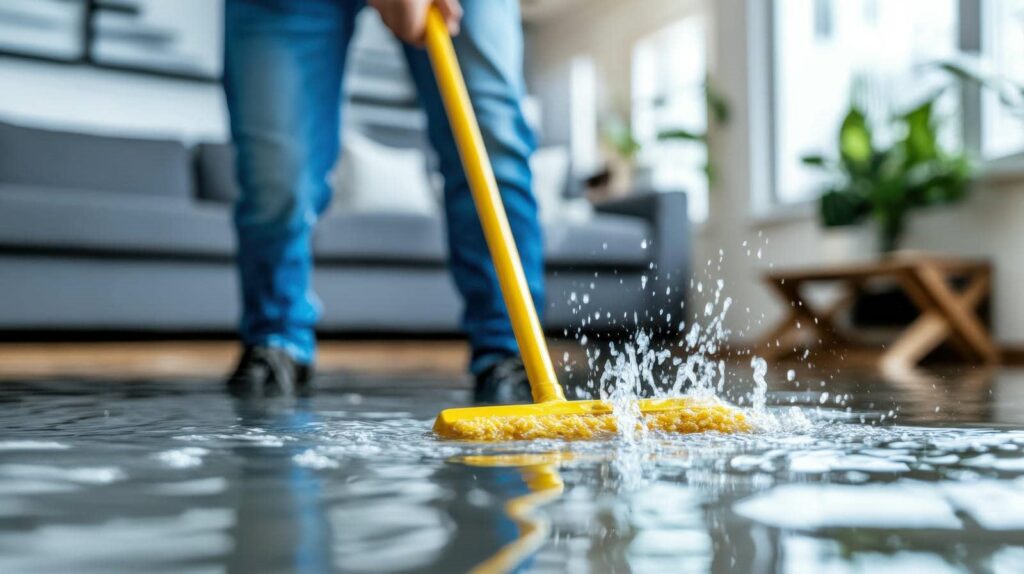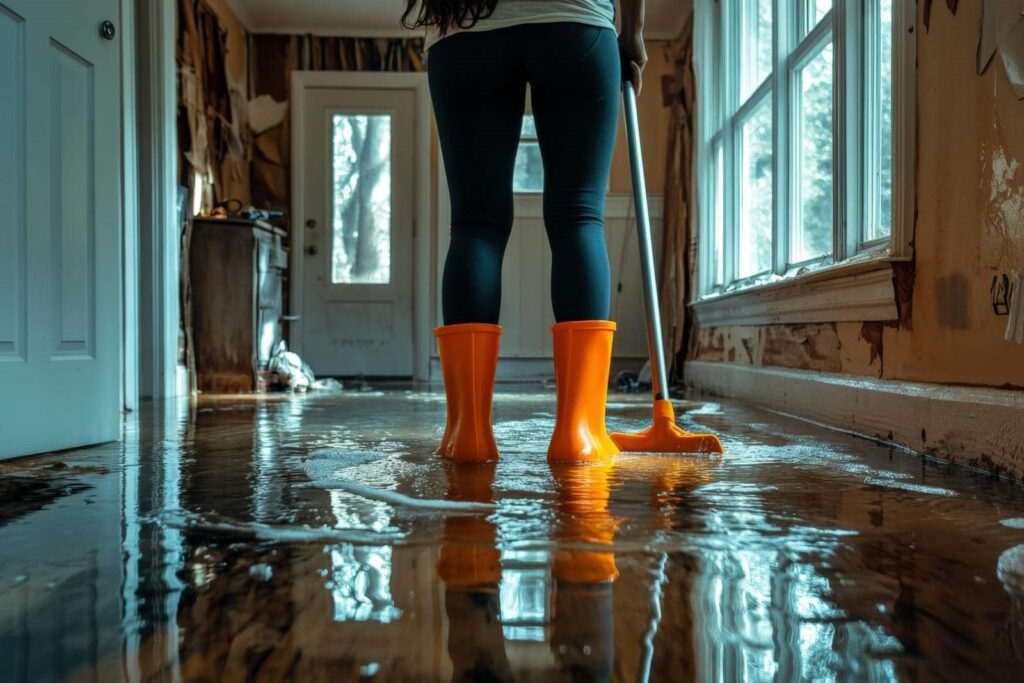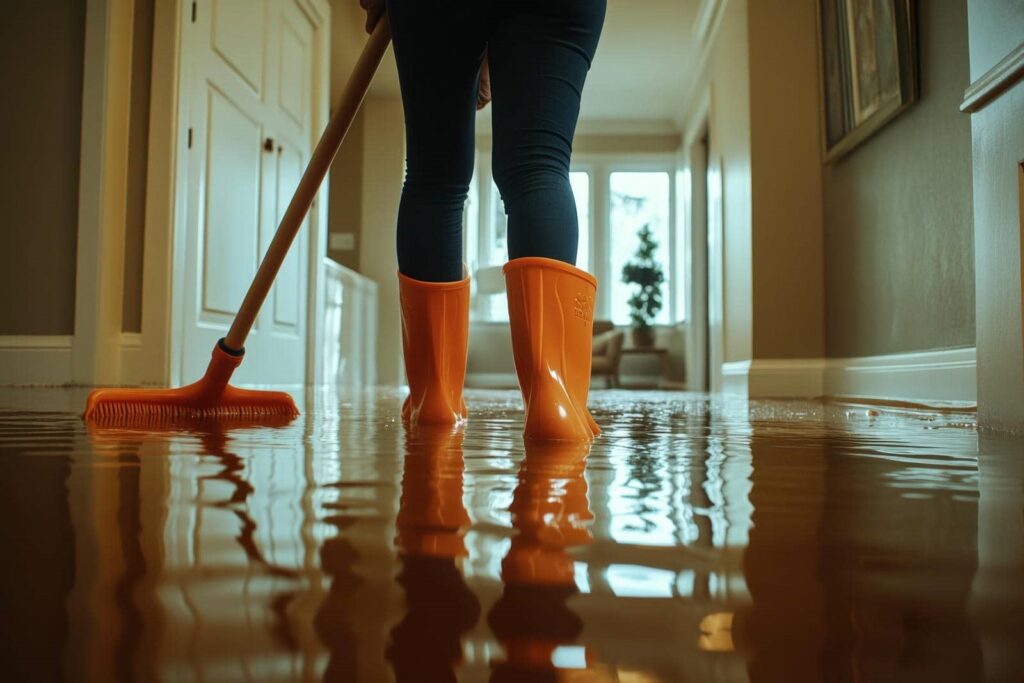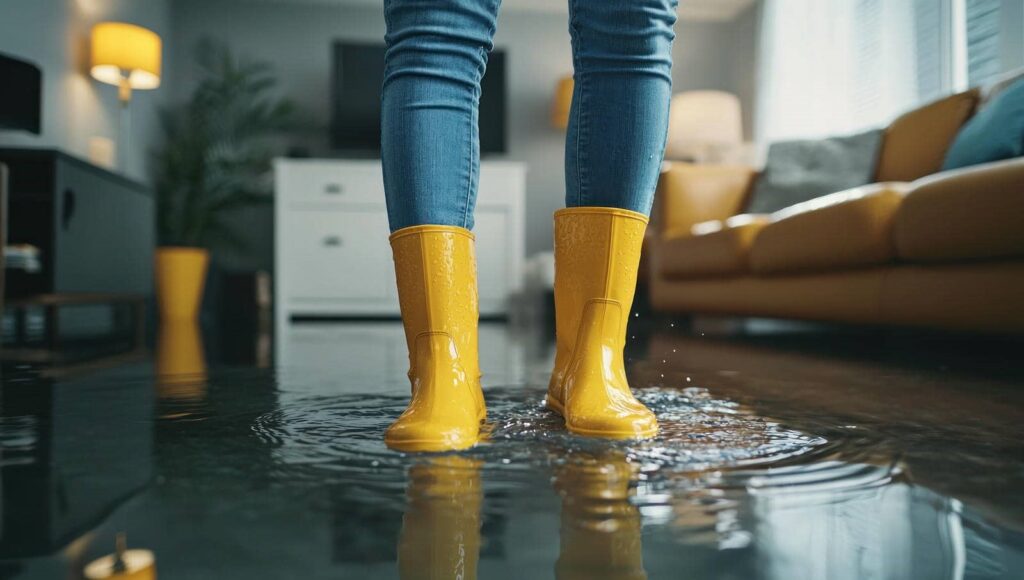
Imagine standing in a waterlogged room, with damp carpets and soaked belongings all around you. In situations like these, quick and effective flood cleanup is vital. You’ll need to prioritize safety, gather essential supplies, and act swiftly to minimize damage. But what steps should you take first? Understanding the process can make a significant difference in recovery efforts.
Key Takeaways
- Conduct a thorough visual inspection of all rooms, documenting damage with photos for insurance claims.
- Prioritize safety by wearing protective gear and turning off utilities before entering the flooded area.
- Gather essential cleanup supplies like mops, buckets, and wet vacs, along with disinfectants and dehumidifiers.
- Remove personal belongings quickly, freeze wet documents, and inspect for mold growth in hidden areas.
- Document all damage meticulously with photos and a list of affected items for streamlined insurance claims.
Assessing the Damage
Before diving into cleanup, it’s essential to assess the damage to your home.
Start with a thorough visual inspection of each room. Look for signs of water intrusion, such as discoloration, peeling paint, or warped surfaces. Pay close attention to areas near windows, doors, and the foundation, as these spots can be particularly vulnerable.
Document everything you find; take photos for your records and any insurance claims.
Next, consider the type of materials affected. Wood, drywall, and insulation can absorb water and promote mold growth if not addressed quickly.
A damage assessment will help you prioritize what needs immediate attention and what can wait.
Prioritizing Safety
When dealing with flood cleanup, safety should always be your top priority. Start by ensuring you follow basic safety protocols. Wear protective gear like gloves, boots, and masks to shield yourself from contaminants and mold.
Before entering your home, check for structural damage and avoid standing water, which may conceal hazards.
Make a list of emergency contacts, including local authorities, utility companies, and health services—having these numbers handy can save time in a crisis. If you notice any signs of gas leaks or electrical issues, evacuate immediately and call for help.
Keep a first aid kit on hand, and know basic first aid procedures. It’s essential to stay informed about weather conditions and alerts, as situations can change rapidly.
Gathering Essential Supplies
Before you start the cleanup, gather the essential supplies you’ll need.
This includes must-have cleanup tools like mops, buckets, and wet vacs, as well as safety gear such as gloves and masks.
Having these items ready will make the process smoother and safer.
Must-Have Cleanup Tools
Having the right tools is essential for effective flood cleanup. Start by gathering high-quality cleaning products, such as disinfectants and mildew removers, to tackle any lingering odors and bacteria.
You’ll need sturdy buckets and sponges for efficient water removal, along with a wet/dry vacuum to handle larger volumes. A mop, brooms, and squeegees help you manage water on floors and surfaces.
Don’t forget a good set of gloves to protect your hands while using restoration techniques. Additionally, having fans and dehumidifiers on hand can speed up the drying process, preventing further damage.
Safety Gear Essentials
As you prepare for flood cleanup, don’t overlook the importance of safety gear to protect yourself from potential hazards.
Start by wearing protective clothing, such as waterproof boots and gloves, to shield your skin from contaminated water and debris. It’s crucial to stay dry and minimize exposure to harmful substances.
Don’t forget a sturdy pair of safety goggles; they’ll protect your eyes from dust, dirt, and splashes while you work. A face mask can also be helpful to avoid inhaling mold spores or other irritants.
By gathering these essential supplies, you create a safer environment for yourself and those around you.
Turning Off Utilities
When faced with flooding, one of the first steps you should take is to turn off your utilities. This helps prevent further damage and keeps you safe. Start by turning off the electricity at the main breaker. If water’s near your electrical panel, avoid touching it; instead, call an electrician for assistance.
Next, turn off the gas line at the meter to reduce the risk of leaks or explosions. If you’re unsure how to do this safely, reach out to your gas provider for guidance.
It’s essential to act quickly but calmly during this process. If you’re unsure about your abilities, don’t hesitate to ask a neighbor or friend for help. Remember, prioritizing safety is key.
Once utilities are off, you’ll be better prepared to manage the cleanup and recovery process. You’re not alone in this; many in your community have faced similar challenges and come out stronger.
Removing Standing Water
With utilities safely turned off, your next priority is removing standing water. Start by evaluating the situation—determine how deep the water is and the best water extraction methods for your space.
If the water is shallow, you can use a wet/dry vacuum, but for deeper water, a submersible pump may be more effective.
Once you’ve chosen your method, start extracting the water, making sure to work in a systematic manner. Don’t forget about effective drainage solutions; verify that any existing drains are clear and can handle the flow.
If you have a lot of debris, using a shovel can help clear thick layers to speed up the process.
Drying Out Affected Areas
To effectively dry out the affected areas after removing standing water, you’ll need to act quickly and methodically.
Start by improving ventilation techniques in the space. Open windows and doors to create airflow, and use fans to circulate air throughout the area. This helps evaporate moisture quickly and prevents mold growth. If it’s humid outside, consider using dehumidifiers to pull excess moisture from the air.
Next, focus on moisture control by removing soaked materials like carpets and insulation. These can trap water and hinder the drying process. Instead, opt for absorbent materials that can be easily dried or replaced.
Check hidden areas like behind walls and under furniture, as moisture can linger there.
Cleaning and Disinfecting Surfaces
Once you’ve dried out the affected areas, it’s time to focus on cleaning and disinfecting surfaces.
Start by prioritizing safety precautions and selecting effective cleaners to eliminate any harmful bacteria.
Finally, make certain to employ proper drying techniques to prevent mold growth and ensure a thorough cleanup.
Safety Precautions First
As you begin cleaning and disinfecting surfaces after a flood, prioritizing safety is essential.
Start by adhering to safety protocols to protect yourself from potential hazards like mold or contaminated water. Wear gloves, masks, and sturdy shoes to minimize exposure.
Before diving into cleanup, make sure you’ve got your emergency contacts handy in case of unforeseen issues.
Check for structural damage and avoid using electrical devices near wet areas. If you’re unsure about a situation, don’t hesitate to reach out for help.
Remember, your well-being comes first. Taking these precautions will keep you safe and help your community recover more effectively.
You’re not alone in this—support is always available.
Choose Effective Cleaners
Effective cleaners play an essential role in your flood cleanup efforts.
To tackle the mess, look for cleaners that boast multi-surface effectiveness, allowing you to use one product on various materials like wood, tile, and fabric. This saves you time and cuts down on the number of products cluttering your space.
Don’t overlook eco-friendly options; they’re just as powerful while being kinder to the environment.
When you choose a cleaner, check the label for disinfecting properties to ensure you’re eradicating any harmful bacteria.
Remember, investing in effective cleaners helps restore your home and protects the health of your family and community.
You’re not just cleaning; you’re creating a safe space for everyone.
Proper Drying Techniques
Proper drying techniques are essential in preventing mold growth and minimizing damage after a flood.
Start by using effective drying methods like fans and dehumidifiers to reduce moisture control in the affected areas. Open windows and doors to promote airflow, but be cautious of outdoor humidity levels.
Remove soaked materials such as carpets and insulation, as they retain moisture and create a breeding ground for mold. Clean and disinfect all surfaces with appropriate cleaners to eliminate contaminants.
Don’t forget to monitor humidity levels with a hygrometer, ensuring they stay below 60%.
Salvaging Personal Belongings
When floodwaters recede, it’s essential to act quickly to salvage your personal belongings before further damage occurs. Start by carefully removing items from the affected area.
Prioritize those with sentimental value, like family photos and heirlooms, as these are irreplaceable. For wet documents, place them in a freezer to halt deterioration until you can restore them properly.
Clean and dry items as soon as possible. Use a mixture of mild soap and water for cleaning, but avoid aggressive scrubbing, which can cause further damage.
For textiles, such as clothing or curtains, wash them in hot water and dry them thoroughly.
Consider professional personal item restoration services for delicate or valuable pieces. They can help with sentimental value preservation, ensuring your cherished belongings are saved.
Inspecting for Mold Growth
After a flood, it’s essential to inspect your space for mold growth.
Start by identifying affected areas and checking humidity levels, as dampness promotes mold.
Make sure you use proper equipment to assess and address any issues effectively.
Identify Affected Areas
To prevent mold from taking hold, you need to quickly identify affected areas in your home after a flood.
Start by conducting thorough flood detection and moisture assessment to pinpoint where water has seeped in.
Check these critical areas:
Basements and Crawl Spaces: These areas are often the first to flood and can retain moisture.
Walls and Ceilings: Look for discoloration, peeling paint, or damp spots that may indicate hidden moisture.
Floors and Carpets: Inspect for dampness or musty odors; carpets can trap water and promote mold growth.
Act fast, as the longer you wait, the greater the risk of mold developing.
Addressing these spots early on helps create a safer home for you and your loved ones.
Check Humidity Levels
It’s essential to check humidity levels in your home, as high moisture can create an ideal environment for mold growth.
Start by using a moisture measurement tool, like a hygrometer, to assess the humidity in affected areas. Ideally, you want to maintain humidity levels between 30% and 60%.
If your readings are higher, it’s time to implement humidity control strategies. Open windows to increase ventilation, or use fans and dehumidifiers to reduce moisture.
Don’t forget to regularly monitor these levels until your home is completely dry. By staying proactive about humidity control, you can markedly lower the risk of mold developing, ensuring a healthier space for you and your family.
Use Proper Equipment
When inspecting for mold growth after a flood, having the right equipment can make all the difference.
Using the appropriate flood cleanup equipment is vital for effective mold detection and prevention. Here are three essential tools you’ll need:
Moisture Meter: This helps you gauge moisture levels in walls and floors, indicating potential mold growth areas.
Personal Protective Equipment (PPE): Gear up with gloves, masks, and goggles to protect yourself from mold spores while working.
Mold Test Kits: These kits allow you to collect samples and determine if mold is present, guiding your cleanup efforts effectively.
Having these essential tools on hand will ensure a thorough inspection and help you tackle any mold issues head-on, keeping your space safe for everyone.
Documenting Damage for Insurance Claims
As you begin the cleanup process after a flood, documenting the damage meticulously is vital for your insurance claim. Start by taking clear photos of all affected areas and items.
Make certain to capture details like water levels and any visible damage, as this’ll help in documenting losses accurately. Create a list of damaged belongings, including their estimated value and age, to support your filing claims later.
If possible, gather receipts or proof of purchase for major items, since this will strengthen your case. Consider taking videos as well, as they can provide a more thorough view of the damage.
Stay organized by keeping all documentation in one place, including correspondence with your insurance company. This will streamline the process and ensure you don’t miss anything important.
Frequently Asked Questions
How Can I Prevent Future Flooding in My Home?
To prevent future flooding, install flood barriers around your property and ensure your drainage systems are clear and functional. Regular maintenance will help keep water away, protecting your home and giving you peace of mind.
What Protective Gear Should I Wear During Cleanup?
During cleanup, wear protective gloves to shield your hands and safety goggles to protect your eyes from debris and contaminants. These essentials help you stay safe and focused while tackling the mess effectively.
Can I Use a Regular Vacuum for Water Removal?
Using a regular vacuum for water removal is like trying to catch rain with a sieve. You’ll need a wet vacuum or shop vac to effectively handle the water and prevent damage.
How Long Does It Take for a Home to Dry Completely?
Your home’s drying time varies, typically ranging from a few days to weeks, depending on moisture levels and ventilation. Make certain you monitor these factors to speed up the drying process and prevent further damage.
When Should I Call a Professional for Flood Cleanup?
If flood damage exceeds 10% of your home’s structure, you should definitely call a professional for water restoration. They can effectively manage extensive damage, ensuring your space is safe and restored to its former state.
Final Thoughts
In the aftermath of a flood, it’s ironic how a deluge can wash away belongings and your peace of mind. Yet, with your safety gear on and a mop in hand, you can transform chaos into order. By following these quick tips, you’re not just fighting water; you’re reclaiming your space. So, roll up your sleeves, embrace the cleanup, and remember—it’s about restoring your home and rebuilding your spirit.