When faced with flood damage, knowing the key steps for cleanup can be overwhelming, but you don’t have to navigate this alone. Start by evaluating the damage to identify urgent issues, like structural integrity and mold risk. Your safety is paramount, so make certain you’re equipped with protective gear. The process involves water removal, drying, cleaning, and eventual restoration. Understanding these steps can make all the difference in effectively restoring your home to a safe environment.
Key Takeaways
- Document all visible flood damage with photos and a detailed list for insurance claims.
- Ensure safety by using protective gear and being aware of hazards like mold and electrical risks.
- Remove standing water using pumps and wet vacuums, then dry affected areas with fans and dehumidifiers.
- Clean and sanitize surfaces with warm soapy water and EPA-approved disinfectants to prevent health risks.
- Assess and repair structural damage, replacing unsalvageable materials to restore your home effectively.
Assessing the Damage
When it comes to evaluating the damage after a flood, the first step is to take a deep breath and approach the situation methodically.
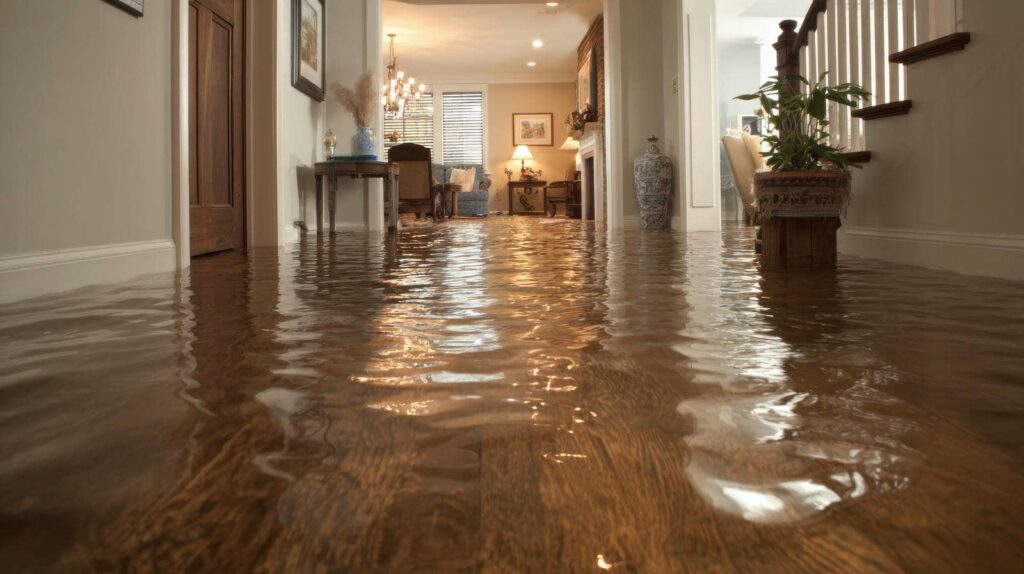
Begin by documenting everything you see. Take photos or videos of affected areas, noting the extent of the water damage. This damage evaluation is essential not just for your own records but also for filing insurance claims.
Next, prioritize which areas need immediate attention. Look for structural damage, mold growth, and ruined belongings.
Make a detailed list of everything that’s been impacted, as this will help when you speak with your insurance adjuster.
Ensuring Safety and Health
Before you begin any cleanup efforts, ensuring your safety and health should be your top priority. Start by evaluating the flood risks in your area and the potential hazards that may arise during cleanup.
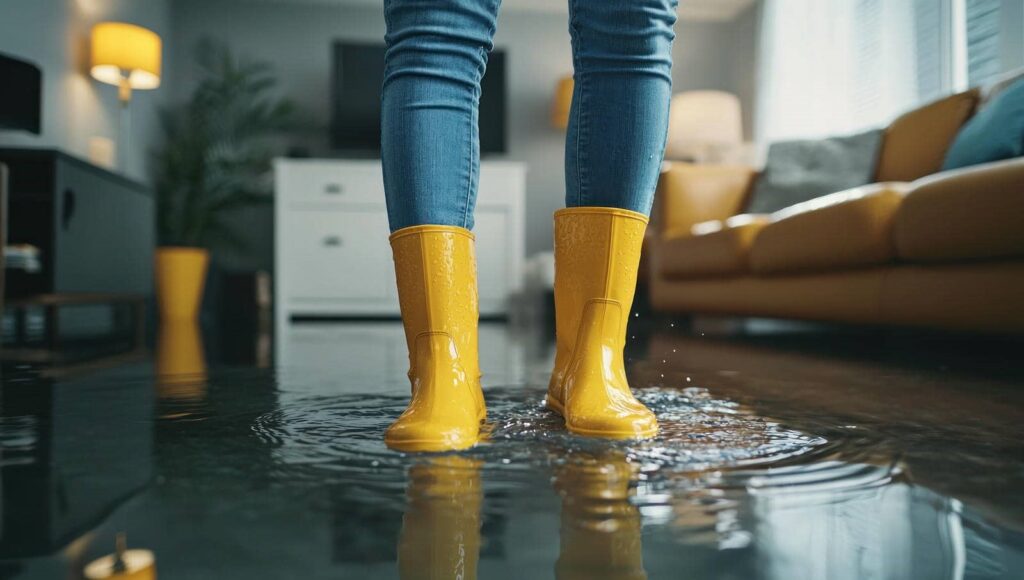
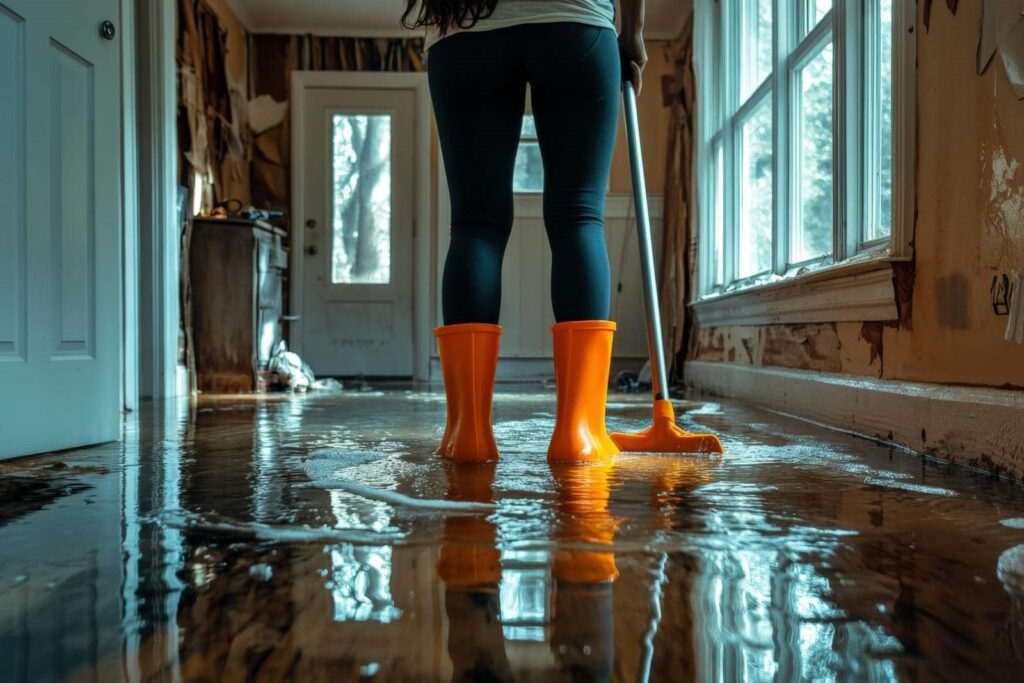
Equip yourself with personal protective gear, like gloves, masks, and waterproof boots, to shield against contaminants and debris. Don’t underestimate the dangers; mold and bacteria can thrive in damp environments, posing serious health threats.
Stay informed about the specific hazards you might encounter, such as electrical risks or unstable structures. If you’re feeling overwhelmed, reach out for support. Community resources, friends, or family can be invaluable.
Water Removal and Drying
Once you’ve assured your safety, it’s time to tackle the water removal and drying process. This step is vital to prevent further damage and mold growth.
Here’s how you can effectively manage water extraction and moisture control:
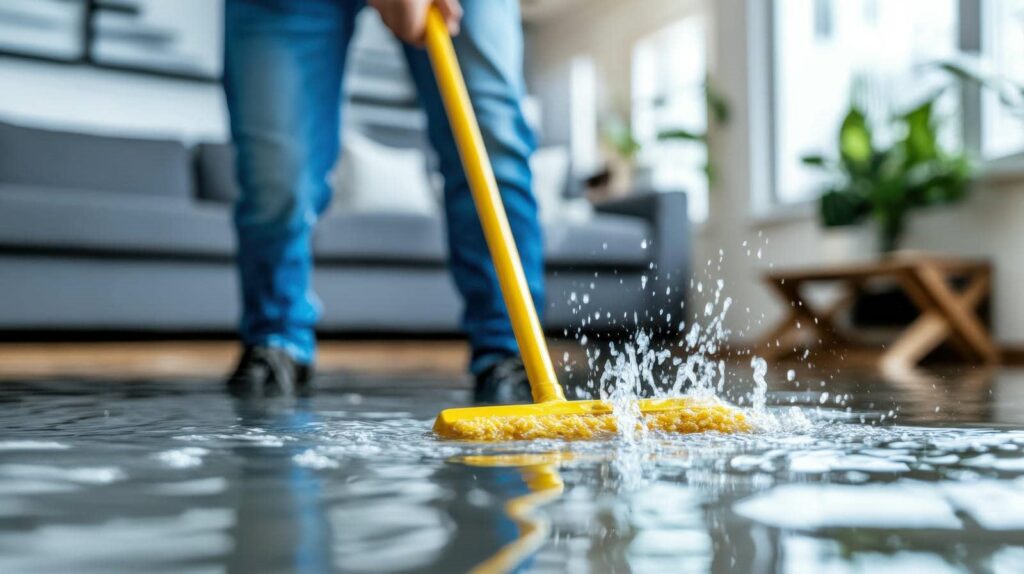
Use Pumps and Wet Vacuums: Start with submersible pumps or wet vacuums to remove standing water. The faster you extract water, the better your chances of minimizing damage.
Dry the Area: After extraction, focus on drying out all affected surfaces. Open windows, doors, and use fans or dehumidifiers to promote airflow.
Monitor Humidity Levels: Keep an eye on moisture levels with a hygrometer. This step helps ensure you achieve ideal moisture control, preventing future issues.
Cleaning and Sanitizing Affected Areas
As you begin the cleanup process, it’s crucial to focus on cleaning and sanitizing the affected areas to eliminate harmful contaminants and prevent health risks.
Start by using effective cleaning techniques, like scrubbing surfaces with warm soapy water to remove dirt and debris. Pay special attention to areas that may have absorbed moisture, such as carpets and furniture.
Once the surfaces are clean, it’s time to use sanitizing products. Choose EPA-approved disinfectants specifically designed for flood damage to ensure you’re killing bacteria and viruses.
Follow the manufacturer’s instructions for proper application and dwell time.
Don’t forget to wear protective gear, like gloves and masks, to keep yourself safe during this process.
Restoration and Repairs
After cleaning and sanitizing the affected areas, you can turn your attention to restoration and repairs.
This is a significant step in the flood restoration process, and it’s important to approach it carefully. You want to ensure your home feels safe and welcoming again.
Here are three essential repair techniques to take into account:
Assess Structural Damage: Check for any damage to walls, floors, and ceilings. Address any compromised structures before moving forward.
Replace Damaged Materials: Remove and replace any materials that can’t be salvaged, like drywall or flooring. This helps prevent future issues.
Repaint and Restore: Once repairs are complete, repaint and restore surfaces to make your home feel fresh and inviting again.
Frequently Asked Questions
How Long Does Flood Damage Cleanup Typically Take?
Flood damage cleanup typically takes several days to weeks, depending on the extent of damage. Understanding flood damage timelines can help you navigate the cleanup process, ensuring you feel supported and prepared throughout this challenging time.
Can I File an Insurance Claim for Flood Damage?
Yes, you can file an insurance claim for flood damage if you have flood insurance. Start the claim process by gathering documentation, contacting your insurer, and following their guidelines to ensure a smooth experience.
What Tools Are Essential for Flood Cleanup?
You’ll need tools like a water extractor for effective water removal and mold remediation supplies to prevent health risks. Having protective gear, dehumidifiers, and cleaning agents also ensures a safe, thorough recovery for your space.
Should I Hire Professionals or Do It Myself?
Deciding between DIY and professional help depends on your skills and budget. Consider the cost of tools and time versus hiring experts who ensure a thorough cleanup. You deserve peace of mind, so weigh your options carefully.
How Can I Prevent Future Flooding in My Home?
Flooding affects one in four homes, so you need to invest in effective drainage systems and proper landscape grading. These steps can greatly reduce your risk, helping you create a safer, more secure environment for your family.
Wrap-Up
In the aftermath of a flood, taking decisive action can mean the difference between a house and a home. By following these key steps—assessing damage, ensuring safety, removing water, cleaning, and restoring—you protect your property and safeguard your peace of mind. Remember, each step you take brings you closer to recovery, transforming chaos into order. With patience and diligence, you’ll reclaim your space and rebuild not just your home, but your sense of security.