Imagine your home as a sponge, soaking up every drop of water after a storm. When water damage strikes, knowing how to act swiftly is vital to prevent lasting harm. You’ll need to assess the water damage, prioritize safety, and gather the right tools. But where do you start, and what techniques will truly make a difference? Let’s explore the essential steps for an effective DIY cleanup that can save your space from further distress.
Key Takeaways
- Identify and stop the water source to prevent further damage before beginning cleanup efforts.
- Use a wet/dry vacuum to efficiently remove standing water from the affected area.
- Clean and disinfect surfaces with bleach or vinegar, allowing disinfectant to sit for at least 10 minutes.
- Employ fans and dehumidifiers to enhance evaporation and dry out damp areas quickly.
- Remove damaged materials and restore personal belongings, documenting items for insurance purposes.
Assessing the Extent of Water Damage
When you face water damage, evaluating its extent is crucial for effective cleanup. Start with water source identification; pinpointing where the water originated helps you understand the potential severity of the damage. This could involve checking for leaks, broken pipes, or even natural flooding.
Once you’ve identified the source, employ damage assessment techniques to gauge how far the water has spread. Look for visible signs like discoloration or warping in walls and floors, and use a moisture meter to detect hidden moisture levels in materials.
Don’t forget to assess structural integrity, as compromised areas may require more attention. Document your findings, as this will guide your cleanup efforts and help you prioritize tasks.
Safety Precautions Before Cleanup
Before you begin the cleanup process, it’s essential to prioritize safety to protect yourself from potential hazards.
Start by evaluating the area for electrical risks; if there’s standing water, turn off the power to prevent shock. Wear protective gear like gloves and masks to shield yourself from contaminants. Keep a first-aid kit handy so you’re prepared for any minor injuries that may occur during your work.
Also, have your emergency contacts easily accessible—whether it’s a neighbor, friend, or local service—to provide support if needed. Make certain you’re aware of any local emergency numbers, as quick access can be crucial in a crisis.
Lastly, ventilate the space to reduce mold growth and facilitate fresh air circulation.
Gathering Essential Tools and Materials
Before you start the cleanup process, it’s essential to gather the right tools and materials.
You’ll need basic cleanup equipment like mops and buckets, protective gear such as gloves and masks, and absorbent materials to tackle the water effectively.
Having these essentials on hand will streamline your efforts and ensure a safer, more efficient cleanup.
Basic Cleanup Equipment
While tackling water damage cleanup, having the right tools and materials at your disposal can greatly streamline the process.
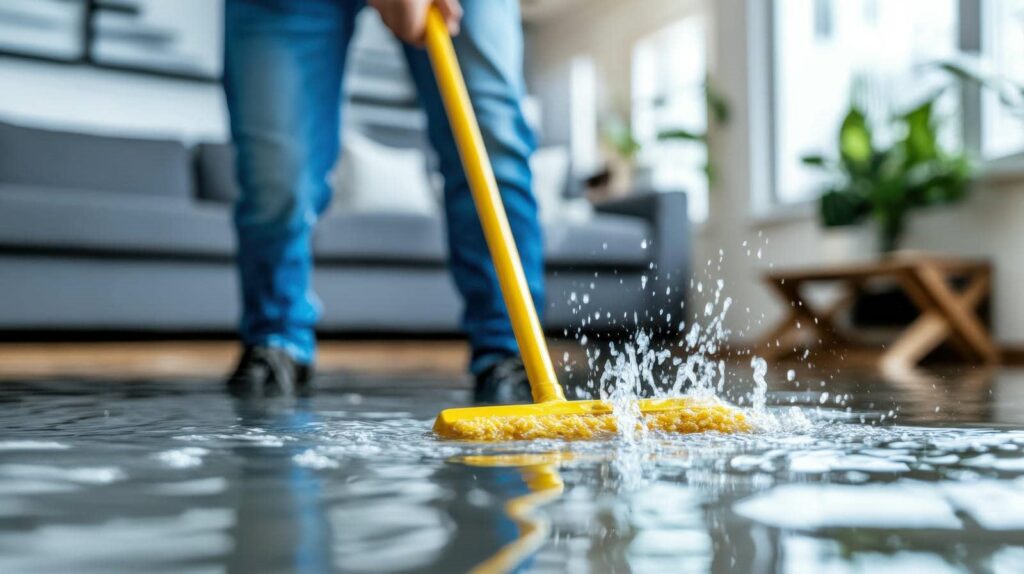
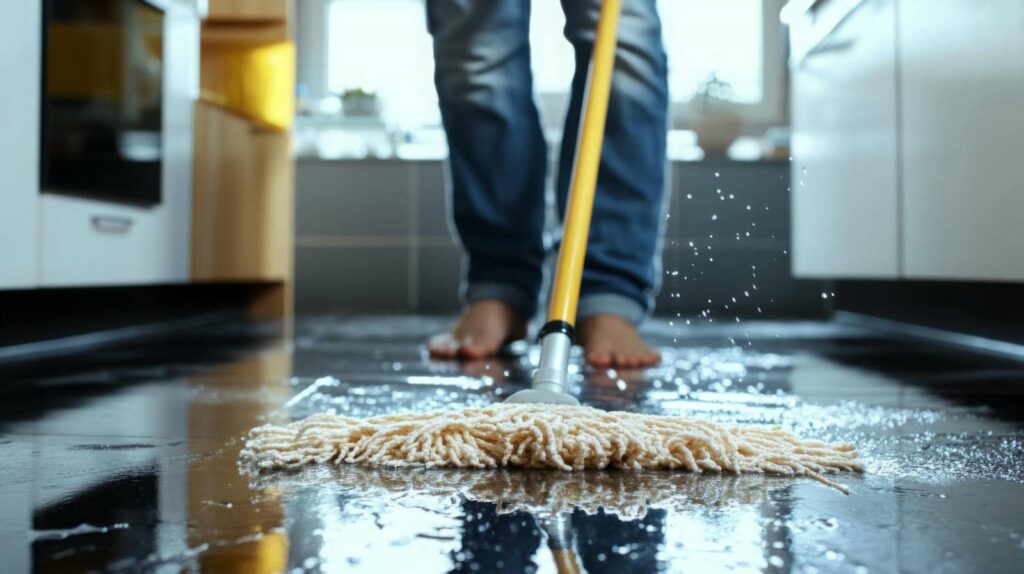
Start with basic cleanup equipment like mops, buckets, and sponges to absorb excess water. A wet/dry vacuum is crucial for efficiently removing standing water, while fans and dehumidifiers help dry out damp areas faster.
Don’t forget to stock up on cleaning supplies, such as disinfectants and mold inhibitors, to ensure a thorough cleanup. Additionally, a sturdy ladder is essential for accessing hard-to-reach areas.
With these fundamental tools in hand, you’ll feel more confident and prepared to restore your space.
Protective Gear Necessities
When diving into water damage cleanup, having the right protective gear is just as essential as your cleaning tools.
Start with glove selection; opt for rubber or nitrile gloves that offer durability and resistance to chemicals. This will protect your hands and enhance your grip on wet surfaces.
Next, consider respirator types. A properly fitted respirator can shield you from mold spores and harmful particles often stirred up during cleanup. Make sure to choose one rated for particulate filtration, ensuring you breathe safely.
Absorbent Materials Selection
Having the right protective gear sets the stage for an effective cleanup, but selecting absorbent materials is equally important in managing water damage.
Start by gathering high-quality towels, mops, and sponges, as these absorbent materials are essential for soaking up excess water. Look for materials with superior absorbent properties, like microfiber or cotton, which can hold more moisture and dry quickly.
If you’re dealing with larger areas, consider using commercial-grade wet/dry vacuums or water-absorbing mats. These tools enhance efficiency and ensure thoroughness in your cleanup process.
Removing Standing Water Effectively
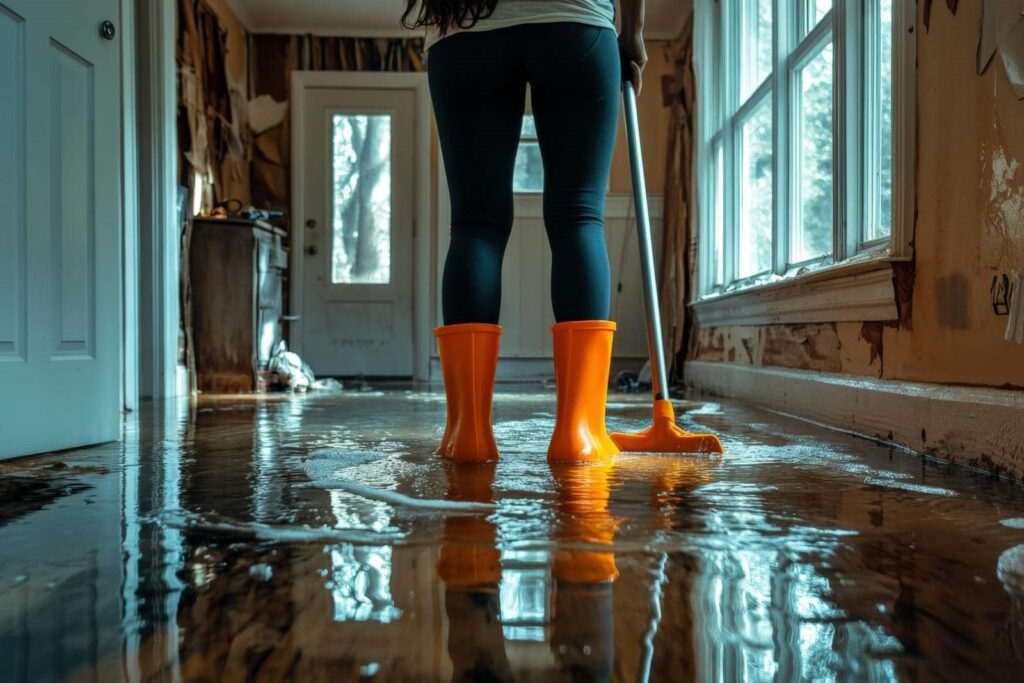
Standing water can quickly lead to extensive damage if not addressed promptly. To initiate standing water removal, assess the situation and gather the necessary tools—such as a submersible pump, wet/dry vacuum, or buckets.
If you’re dealing with a significant amount of water, effective pumping is essential. Position the pump in the deepest area of the standing water and connect it to a hose that leads outside to ensure proper drainage.
Once the bulk of the water is removed, use a wet/dry vacuum for any residual moisture. Don’t forget to check for hidden pockets of water in corners or under furniture.
After you’ve removed the standing water, make sure you take measures to prevent mold growth and further damage. Your prompt and thorough efforts will make a difference, helping you reclaim your space and restore a sense of normalcy.
Drying Out Affected Areas
To effectively dry out affected areas after water damage, you must act quickly and methodically.
Begin by evaluating the moisture levels using a moisture measurement tool. This helps you identify the most saturated spots, guiding your drying efforts.
Next, implement ventilation techniques to enhance airflow. Open windows and doors, and utilize fans to circulate air. This speeds up the drying process and helps prevent mold growth.
Here’s a simple checklist to follow:
- Use Dehumidifiers: Set them up in the affected areas to extract excess moisture.
- Remove Wet Materials: Take out soaked carpets, furniture, or insulation to facilitate drying.
- Monitor Progress: Regularly check moisture levels to verify everything is drying effectively.
Cleaning and Disinfecting Surfaces
Once you’ve dried out the affected areas, it’s vital to clean and disinfect surfaces thoroughly to prevent mold and bacterial growth.
You’ll need essential cleaning supplies like bleach or vinegar, along with proper tools for effective disinfection.
Additionally, mastering surface drying methods will ensure that you create an environment that’s safe and healthy.
Essential Cleaning Supplies
When tackling water damage cleanup, having the right cleaning supplies on hand is essential for effectively disinfecting surfaces.
You’ll want to ascertain that you have everything necessary to restore your space to a safe and welcoming environment. Here are three key items to contemplate:
Cleaning solutions: Choose a disinfectant that’s effective against mold and mildew. Look for EPA-approved products for reliable results.
Absorbent materials: Stock up on towels, sponges, or microfiber cloths to soak up excess water and facilitate thorough cleaning.
Protective gear: Don’t forget gloves, masks, and goggles to keep yourself safe while you work.
With these essential supplies, you’ll be well-equipped to tackle the challenges of water damage cleanup and create a healthier home.
Effective Disinfection Techniques
While it might seem intimidating, effectively disinfecting surfaces after water damage is essential to preventing mold growth and ensuring your safety.
Start with effective cleaning methods like scrubbing surfaces with warm, soapy water to remove dirt and debris. Once cleaned, consider using natural disinfectant options, such as a mixture of vinegar and water or hydrogen peroxide, to eliminate germs.
Apply your chosen disinfectant generously, allowing it to sit for at least 10 minutes for maximum effectiveness. Don’t forget high-touch areas like doorknobs and light switches!
After disinfecting, wipe surfaces with a clean cloth to remove residue. By following these steps, you’ll create a safer environment, fostering a sense of community and well-being in your space.
Surface Drying Methods
Effective surface drying methods are essential in preventing further damage and mold growth after water exposure.
You’ll want to utilize effective surface drying techniques to restore your space to its original state. Here are three key evaporation methods to evaluate:
Air Circulation: Use fans or open windows to promote airflow, which enhances evaporation and helps dry surfaces faster.
Dehumidifiers: These devices effectively remove moisture from the air, speeding up the drying process and preventing condensation.
Absorbent Materials: Employ towels or sponges to soak up excess water from surfaces before using other drying techniques.
Dealing With Mold Prevention
To effectively prevent mold growth after water damage, you must act quickly and methodically. Start by thoroughly drying out the affected areas within 24-48 hours—this is vital.
Utilize fans, dehumidifiers, and open windows to improve air circulation and reduce humidity levels. Aim for a humidity level below 60% in your home; this is key to mold prevention.
Next, make certain that any porous materials like carpets, drywall, or insulation are completely dry. If they’re damp for too long, they can become breeding grounds for mold.
Regularly inspect areas prone to moisture, such as basements and bathrooms, and address leaks promptly.
Finally, consider using mold-resistant products when repairing or restoring affected areas. By taking these proactive steps, you’ll create a healthier environment and foster a sense of belonging, knowing you’re protecting your home from mold growth effectively.
Repairing Damaged Structures
Once you’ve addressed mold prevention, it’s essential to assess the structural integrity of your home.
Start by identifying and removing any damaged materials to ensure a solid foundation for rebuilding.
After that, focus on reinforcing the structures to restore their strength and safety.
Assessing Structural Integrity
As you begin the process of evaluating structural integrity after water damage, it’s vital to thoroughly inspect all affected areas. A careful assessment ensures safety and helps you decide on necessary repairs.
Focus on these three key components:
Foundation Assessment: Check for cracks, shifts, or settling that could compromise the stability of your home.
Load Bearing Evaluation: Inspect beams and columns for signs of warping or weakening, as these are critical for supporting the structure.
Wall and Roof Inspection: Look for sagging or bulging, which can indicate moisture damage that affects overall integrity.
Removing Damaged Materials
Removing damaged materials is a critical step in the water damage cleanup process, making sure that your home regains its integrity and safety.
Start by identifying all affected areas, including drywall, flooring, and insulation. Use effective removal techniques, such as cutting out damaged sections with a utility knife or pry bar, to minimize further damage. Always wear protective gear, like gloves and masks, to keep yourself safe during this process.
Once you’ve removed the materials, focus on proper material disposal. Follow local regulations for disposing of hazardous waste and make certain that you recycle whenever possible.
Rebuilding and Reinforcing Structures
While rebuilding and reinforcing structures after water damage can seem intimidating, approaching the task methodically will help restore your home’s safety and stability.
Start by evaluating the damage to identify which areas need attention.
Next, consider these essential reinforcement techniques:
Choose the Right Structural Materials: Use water-resistant materials, such as treated lumber or steel, to ensure durability.
Install Support Beams: Adding support beams can help distribute weight and reinforce weakened areas.
Seal Vulnerable Areas: Use sealants to prevent future moisture intrusion and protect your home’s integrity.
Restoring Personal Belongings
Restoring personal belongings after water damage requires a careful approach to minimize loss and preserve your items. Start by evaluating the damage.
For salvaging photographs, gently rinse them with clean water and lay them flat to dry, avoiding direct sunlight. If they’re stuck together, freeze them to separate without further harm.
For restoring electronics, immediately disconnect power and remove batteries. Dry the exterior with a cloth, then use a vacuum to remove any moisture from vents. Allow your devices to dry completely—this can take days, so be patient. Check with professionals for those that don’t power on after drying.
Don’t forget to document everything for insurance purposes. While the process may be time-consuming, each effort you make helps preserve the memories and value of your cherished possessions.
Implementing Preventive Measures for the Future
To prevent future water damage, it’s essential to take proactive steps that safeguard your home and belongings.
Implementing effective strategies now can save you significant stress and costs later. Here are three key measures you should consider:
Waterproofing Techniques: Apply waterproofing sealants to your basement walls and foundation. This creates a barrier against moisture and prevents leaks from infiltrating your home.
Drainage Solutions: Verify your gutters and downspouts are clear and directing water away from your foundation.
Consider installing French drains around your home to channel excess water away effectively.
- Regular Maintenance: Schedule regular inspections of your plumbing and appliances.
Look for leaks or signs of wear and tear, so you can deal with potential issues before they escalate.
Frequently Asked Questions
How Can I Tell if Water Damage Is Structural or Cosmetic?
You can tell by performing a water damage assessment. Check for sagging ceilings, cracks in walls, or warped floors—these indicate potential structural integrity issues. Cosmetic damage usually involves surface staining without compromising the structure’s support.
What Are the Signs of Hidden Water Damage?
Look for hidden leaks, musty odors, peeling paint, or warped floors. Using moisture detection tools can help you find these issues early on.
Is It Safe to Use Electrical Appliances After Water Exposure?
No, it isn’t safe to use electrical appliances after water exposure. You should conduct a thorough appliance inspection to ensure electrical safety. If in doubt, consult a professional before using any damaged devices.
How Long Should I Wait Before Starting the Cleanup Process?
You should wait at least 24 to 48 hours after water exposure before starting the cleanup process. This water damage timeline allows for proper assessment and cleanup preparation, ensuring a safer and more effective restoration.
Can I Use Bleach to Clean After Water Damage?
You shouldn’t use bleach for cleaning after water damage. While it can kill mold, it doesn’t prevent regrowth. Instead, focus on thorough drying and consider specialized products for effective mold prevention and lasting results.
Recap
Ttackling water damage promptly is essential. By following these DIY techniques, you can minimize the damage and save your home from further complications. Remember, the quicker you act, the better your chances are of preventing mold and restoring your space. Stay organized and methodical in your approach, and you’ll be well on your way to recovery.