When faced with emergency water damage, your immediate actions can greatly affect the recovery process. Start by ensuring safety—turn off electricity and assess for hazards. Next, you’ll need to identify the source of the water. Documenting the damage is vital, as well as understanding your insurance coverage. But how do you choose the right restoration service, and what steps should you follow? Let’s explore these essential aspects further.
Key Takeaways
- Assess the type of water damage to determine appropriate immediate actions and safety precautions.
- Turn off electricity, avoid standing water, and wear protective gear during initial assessment.
- Document damage thoroughly with photos and lists for insurance claims and restoration services.
- Research and select a reputable restoration service, considering their response time and customer reviews.
- Communicate promptly with your insurance provider to report the incident and manage the claims process effectively.
Understanding the Types of Water Damage
When you encounter water damage, it’s essential to recognize the different types, as each requires specific restoration approaches. Flood categories are critical in this assessment, as they classify water based on its source and contamination level.
Category 1 involves clean water, like a broken pipe, while Category 2 contains greywater, which may come from appliances. Category 3 is the most severe, featuring blackwater from sewage or floodwaters, posing health risks.
Understanding moisture levels is equally important. You’ll need to assess how deeply water has penetrated your materials—this affects drying techniques and the urgency of your response.
For instance, quick action is necessary if moisture levels are high, as prolonged exposure can lead to mold growth. By identifying the flood category and evaluating moisture levels, you can set a solid foundation for effective restoration and help ensure your space feels safe and welcoming again.
Immediate Steps to Take After Water Damage
After experiencing water damage, your first priority is ensuring safety; turn off the electricity and avoid areas with standing water.
Next, you need to stop the source of the water, whether that’s shutting off a valve or fixing a leak.
Taking these immediate steps can prevent further damage and protect your health.
Ensure Safety First
Although water damage can be overwhelming, ensuring safety is your top priority. Start by following established safety protocols.
Before entering the affected area, assess for hazards like loose wiring or structural damage. Wear protective gear such as gloves and boots to avoid contact with contaminated water.
If you have an emergency kit handy, make sure it’s stocked with essentials like flashlights, batteries, and first-aid supplies.
Turn off the electricity to prevent electrocution, and avoid walking through standing water, as it may conceal dangerous debris.
Keep children and pets away from the area until it’s deemed safe.
Stop Water Source
Once you’ve ensured your safety, the next step is to stop the water source that’s causing the damage.
Start by identifying the leak; this is essential for effective leak detection. Inspect visible pipes, appliances, and fixtures for signs of moisture or dripping. If you locate the source, turn off the appropriate valve to halt the flow immediately.
For more severe cases, you may need to shut off the main water supply. Remember, if you can’t find the leak or if it’s beyond your skill set, don’t hesitate to call a professional. They’ve the tools and expertise to quickly identify and resolve complex issues.
Taking swift action now prevents further damage and fosters a sense of control during a stressful situation.
Assessing the Extent of Damage
When you’re faced with water damage, accurately evaluating the extent of the damage is vital for effective restoration. Start with a thorough damage evaluation, identifying visible signs such as discoloration, warping, or peeling paint. These indicators often point to underlying issues that need attention.
Next, conduct a moisture assessment using a moisture meter to measure levels in walls, floors, and furnishings. This will help you determine the severity of the water intrusion and whether materials can be salvaged or need replacement.
Pay close attention to hidden areas, like behind drywall or under carpets, where moisture can linger undetected. Document all findings, as this information will be important for any restoration services you might engage.
Choosing the Right Restoration Service
How can you ensure that you choose the right restoration service for your water damage needs? Start by researching the service reputation of potential companies.
Look for businesses with a solid track record and certifications in water damage restoration. Don’t hesitate to read customer reviews; they provide insight into the experiences of others and can highlight the quality of service you can expect.
Pay attention to how quickly they respond to inquiries and their availability for emergency situations. A reliable service should be transparent about their methods and pricing, ensuring there are no hidden costs.
Additionally, check if they’ve insurance and warranties to protect your interests. Ultimately, choosing the right restoration service means finding a company that meets your technical needs and makes you feel understood and supported during a stressful time.
Your peace of mind is their priority.
The Restoration Process Explained
As you commence the water damage restoration process, understanding the steps involved can greatly ease your mind.
The restoration timeline typically starts with a thorough damage assessment, allowing professionals to evaluate the extent of the issue. Here’s what you can expect:
Initial Inspection: Technicians assess the affected areas to identify the source and level of damage.
Water Extraction: They’ll remove standing water using specialized equipment to prevent further damage.
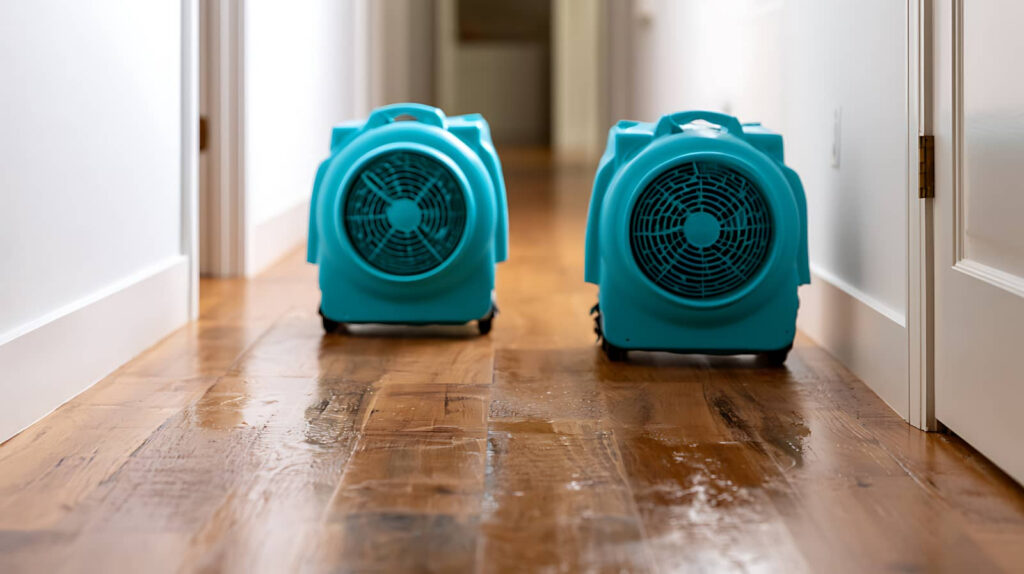
Drying and Dehumidification: This essential step involves using fans and dehumidifiers to ensure that all moisture is eliminated, thereby reducing the risk of mold growth.
Restoration and Repairs: Finally, repairs begin, restoring your space to its original condition.
Preventative Measures for Future Incidents
To prevent future water damage incidents, you need to implement regular maintenance checks throughout your property.
Installing water alarms can provide early warnings, allowing you to act before significant damage occurs.
Additionally, ensuring proper drainage systems are in place will help manage excess water effectively and reduce the risk of flooding.
Regular Maintenance Checks
Regular maintenance checks are essential in preventing water damage and ensuring your property remains safe and dry.
By incorporating preventative maintenance and routine inspections into your schedule, you can identify potential issues before they escalate.
Here are some key areas to focus on:
Inspect plumbing fixtures for leaks or corrosion.
Check the roof and gutters to prevent water accumulation.
Examine the basement and crawl spaces for signs of moisture or mold.
Test sump pumps and drainage systems regularly to ensure their proper functionality.
Install Water Alarms
Incorporating water alarms into your property can greatly enhance your defense against potential water damage. These devices provide effective detection of leaks and moisture, allowing you to act quickly before major issues arise.
During water alarm installation, place them in high-risk areas such as basements, bathrooms, and near appliances like washing machines and water heaters. Opt for models with features like smartphone alerts for immediate notifications.
Regularly test the alarms to verify they’re functioning properly. By taking these proactive steps, you protect your home and foster a sense of community responsibility among your neighbors.
Proper Drainage Systems
A well-designed drainage system is essential for preventing water damage and ensuring your property remains safe from flooding.
To effectively manage water flow, consider the following drainage solutions:
Gutters and Downspouts: Ensure they’re clear and direct water away from your foundation.
French Drains: Install these to redirect groundwater and surface water efficiently.
Sump Pumps: Use these to remove accumulated water from basements and crawl spaces.
Grading: Maintain proper grading around your property to facilitate natural drainage.
Insurance Considerations and Claims Process
How can you effectively navigate the insurance process after experiencing water damage?
First, review your insurance coverage to understand what’s included and what’s excluded. Many policies cover sudden and accidental water damage, but not all.
Next, document everything meticulously. Take photos of the damage, keep receipts, and make a list of affected items—this is crucial for claims documentation.
Contact your insurance provider promptly to report the incident. They’ll guide you through the claims process, but you must be proactive. Follow up regularly to verify your claim is being processed. If necessary, ask for an adjuster to assess the damage personally.
Lastly, keep copies of all communications and documents for your records. This organized approach speeds up the claims process and helps you feel more in control during a stressful time.
Your diligence can make a significant difference in receiving the compensation you deserve.
Frequently Asked Questions
How Long Does Water Damage Restoration Typically Take?
Water damage restoration typically takes three to five days, depending on the severity. After a thorough damage assessment, your restoration timeline will be established, ensuring you understand each step in the process to reclaim your space.
Can I Stay in My Home During Restoration?
You can stay in your home during restoration, but safety concerns arise. Water-damaged homes can develop mold within a week. Ensure professionals manage the restoration process to minimize risks and keep your space safe.
What Items Can Be Salvaged After Water Damage?
You can salvage items like furniture through restoration processes and recover electronics if they’re quickly dried and assessed. Prioritize valuable belongings, ensuring you consult professionals for effective restoration techniques and to prevent further damage.
How Can I Prevent Mold Growth After Water Damage?
To prevent mold growth, control moisture by promptly drying affected areas, using dehumidifiers, and ensuring proper ventilation. Regularly inspect for leaks and maintain humidity levels below 60% to keep your space mold-free and healthy.
What Should I Do if I Experience Repeated Water Damage?
If you experience repeated water damage, start by conducting a thorough damage assessment. Document everything for insurance claims, and consult professionals to identify underlying issues. Addressing root causes prevents future incidents and fosters a safe environment.
Recap
In maneuvering emergency water damage restoration, remember that swift action is essential. By understanding the types of damage, evaluating the situation, and working with a reliable restoration service, you can effectively minimize loss and expedite recovery. Stay proactive—document everything and communicate with your insurer to ensure a smoother claims process and better protection in the future.